
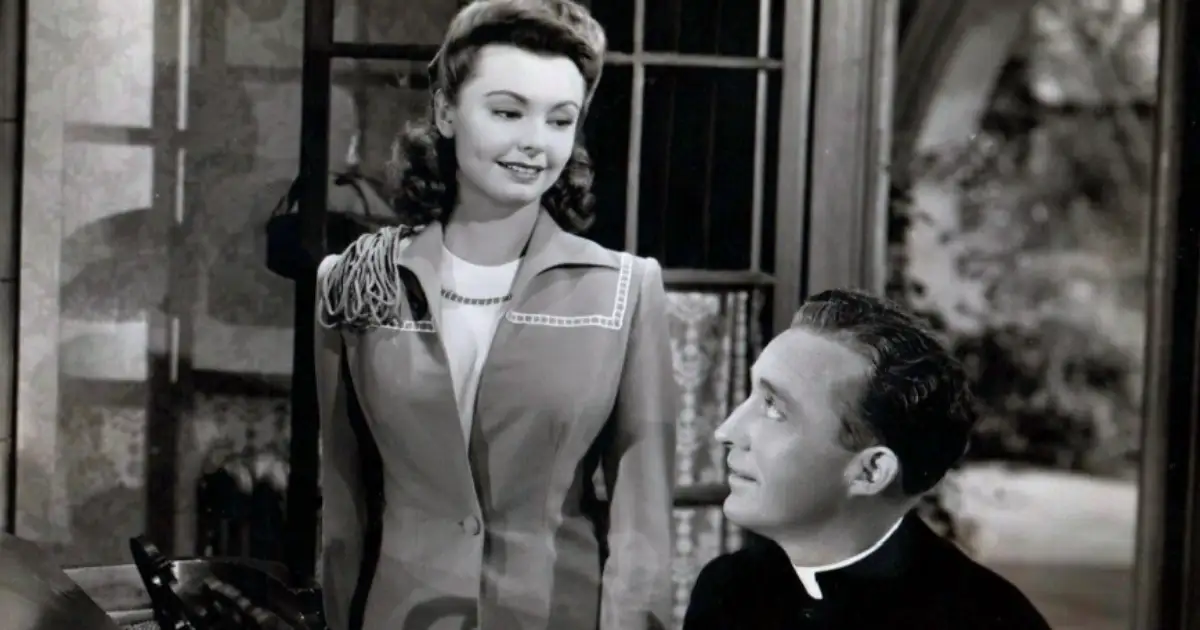
What if the gentlest box-office phenomenon of 1944 was a priest with a golf habit, a soft voice, and a stubborn belief that people can still be surprised by kindness—because that is exactly what Going My Way (1944) dares to be.
Going My Way (1944) is an American musical comedy-drama directed and produced by Leo McCarey, with Bing Crosby as Father Chuck O’Malley and Barry Fitzgerald as Father Fitzgibbon.
It premiered in New York City on May 3, 1944 and runs about two hours and ten minutes. It dominated its awards season with seven Academy Awards including Best Picture, and it is still discussed as one of the era’s defining morale-boosters.
When I revisit Going My Way (1944), I’m struck by how deliberately it chooses warmth over cleverness, as if it’s trying to calm an anxious room. I also notice how its sentimentality can either feel healing or feel manipulative, depending on what you bring to it that day.
If you have seen my “101 Best Films You Need to See” post on Probinism, you will recognise that I already flagged Going My Way (1944) there as a worthy classic, and this is my fuller conversation with it.
There are hard, verifiable reasons the film keeps resurfacing in cinema discussions, beyond nostalgia. At the 17th Academy Awards, Going My Way (1944) won Best Picture and Leo McCarey won Best Director, while Crosby won Best Actor and Fitzgerald won Best Supporting Actor.
The Library of Congress selected Going My Way (1944) for the National Film Registry in 2004, describing the chosen films as culturally, historically or aesthetically significant.
Rotten Tomatoes’ critics consensus captures the ambivalence many modern viewers feel: it is charming and likable, but possibly too sweet. And in the middle of all that institutional praise, the film’s simplest claim—people soften when you actually listen to them—still feels quietly radical.
At its core, Going My Way (1944) is a story about a new priest arriving at Saint Dominic’s in New York City and slowly changing the place by changing the people inside it. Spoiler alert: the ending is reconciliation rather than tragedy, and I will talk you through the key twists and turning points.
Before I walk you through the full spoiler-filled plot of Going My Way (1944), it helps to place it in the world that produced it.
Table of Contents
Background
Going My Way (1944) arrived while World War II still shaped everyday language, and Hollywood often tried to translate fear into reassurance without pretending fear was not there.
Paramount released Going My Way (1944) as a musical comedy-drama that could work for almost any audience: families, churchgoers, and even viewers who simply wanted Bing Crosby’s voice in a darkened theatre.
The story was credited to McCarey, with the screenplay by Frank Butler and Frank Cavett, and the finished film leans on character moments more than plot mechanics. That emphasis is part of why the movie can feel like a series of lived-in episodes rather than one tightly wound narrative.
The cast is a small parade of recognizable faces, but the center of gravity is Crosby’s relaxed charm against Fitzgerald’s prickly dignity. Even the film’s music functions like character work, because the songs become tools that move relationships forward rather than separate showpieces.
If you are wondering whether Going My Way (1944) was simply popular, the numbers say it was bigger than that.
The AFI Catalog reports that by September 1944 the film had earned over 7,000,000 dollars in gross revenue, with foreign totals reaching 10,000,000 dollars, which would have made it Paramount’s largest-grossing film to that date.
Wikipedia’s summary also calls Going My Way (1944) the highest-grossing picture of 1944 and records US and Canada rentals of 6.5 million dollars.
Contemporary trade coverage was confident about the financial outcome, with Variety predicting “hefty biz” and wide audience appeal even while calling the film overlong. Critical reactions were warm enough to become institutional history when the Oscars landed. Britannica, looking back, simply calls the film a success and notes how openly sentimental its story is, which is a polite way of saying it never apologizes for its softness.
The financial story matters because it explains why this gentle movie was not a niche religious curiosity, but a mainstream event.
The song “Swinging on a Star,” introduced by Crosby in Going My Way (1944), won the Academy Award for Best Original Song, which helps explain why the film’s melodies stuck in popular memory.
If you watch the film today, you can almost feel the studio betting that a tune could be its own kind of comfort.
With that context in place, the plot of Going My Way (1944) becomes easier to read as a portrait of community repair rather than a conventional conflict-and-resolution machine.
Going My Way Plot
The plot of Going My Way (1944) begins with Father Chuck O’Malley arriving from East Saint Louis to the worn-down parish of Saint Dominic’s in New York City, carrying the kind of calm that makes suspicious people even more suspicious.
From the start, the film frames him as unconventional without making him rebellious: he smiles easily, talks plainly, and seems to treat the collar as a responsibility rather than a performance.
That attitude immediately collides with Father Fitzgibbon, who has guarded Saint Dominic’s for decades and reads every shortcut as disrespect. The tension is gentle, but it is real, because both men believe they are protecting the same church in different ways.
O’Malley’s first days are a chain of small mishaps that matter mainly because they build an atmosphere of judgement around him. His casual approach, his friendships, and even his leisure habits make the older priest fear that the parish has been handed to someone who does not understand the stakes.
Then the film lets the audience in on the stakes: Saint Dominic’s is deep in debt, and its survival is not guaranteed.
A fellow priest, Father Timmy O’Dowd, draws O’Malley into a conversation that reveals the uncomfortable truth that the bishop sent him to take charge of the parish’s affairs rather than merely assist.
Instead of marching in with authority, O’Malley chooses a softer tactic and pretends he is simply Fitzgibbon’s assistant, because humiliation would only harden the older man’s resistance.
Going My Way (1944) keeps returning to this choice, almost as if it is the central moral experiment: can you lead without shaming the person you are trying to help. Fitzgibbon, meanwhile, can feel something slipping even when nobody says it aloud, and that feeling makes him more irritable rather than more open.
Their scenes together are built on tiny slights and tiny kindnesses, which is exactly how real relationships change in real life. The film trusts that these small frictions are enough to keep us watching.
As they begin dealing with parish life, the difference in style becomes public, whether it is about an eviction or about a young woman named Carol James who has run away from home.
Fitzgibbon’s instinct is to preserve order, while O’Malley’s instinct is to preserve people, even when the people look messy.
That contrast sets up every later turn in Going My Way (1944), because each crisis becomes a test of what kind of care actually works.
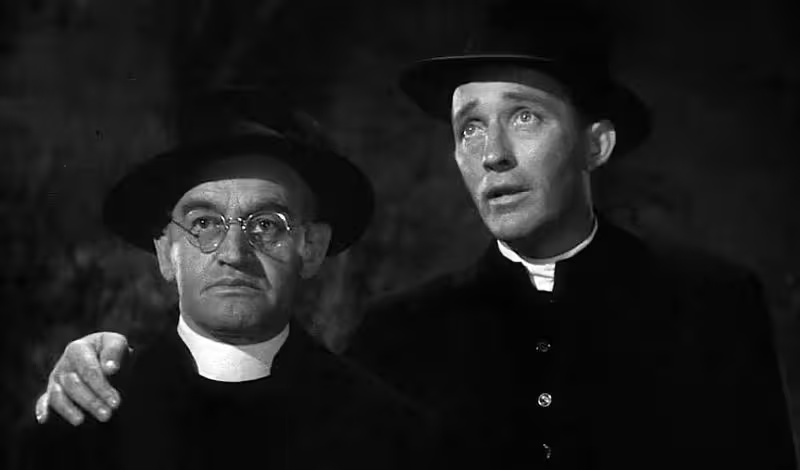
O’Malley soon notices a group of local boys whose toughness looks like a costume stitched together out of boredom and hunger.
Fitzgibbon tends to tolerate them, partly because they show up at church and partly because he has learned which battles will not move. O’Malley takes a different route, treating them as raw material for something better rather than as a nuisance to be managed.
The boys’ informal leader, Tony Scaponi, tests O’Malley’s patience, but the film makes clear that O’Malley is not shocked by street attitudes, only saddened by wasted potential.
When O’Malley suggests a boys’ choir, it is not merely about music, but about giving the boys a discipline that feels like belonging. The idea irritates Fitzgibbon, who hears the rehearsals as noise and hears change itself as disrespect.
The conflict finally becomes explicit when Fitzgibbon goes to the bishop and asks for O’Malley to be transferred.
During that conversation, Fitzgibbon realizes what O’Malley has been hiding: the bishop intended O’Malley to run the parish’s practical affairs.
Faced with that reality, Fitzgibbon asks the bishop to let him stay and to let O’Malley go, because pride is sometimes louder than reason. O’Malley is not trying to win a job title, and his next move is quietly strategic rather than dramatic.
Fitzgibbon returns to the church distressed, walks in the rain for hours, and comes back late as if he has physically worn down his own anger. O’Malley puts him to bed with a gentleness that feels like the first real truce between them.
The movie lets an Irish lullaby drift through the room, and it feels like a bridge built out of memory rather than argument.
In a softer scene that follows, the two priests finally talk as people rather than rivals, and Fitzgibbon admits a long, unfulfilled desire to return to Ireland to see his mother, now in her nineties. O’Malley responds not with advice but with presence, and the film treats that as a form of courage.
If the first half of Going My Way (1944) is about authority, this stretch is about intimacy, because reconciliation begins when someone stops keeping score.
Just when the parish story could settle into routine, Going My Way (1944) pulls in O’Malley’s past, as if to test whether his serenity is real or just performance.
O’Malley runs into Jenny Tuffel, an old girlfriend whose name lands in the film like a small shock, because it reminds us that he had a full life before the priesthood. Jenny is now a respected opera singer performing under the stage name Genevieve Linden, and her world is bright, formal, and expensive in a way the parish is not.
Backstage, as she prepares for Carmen, she finally receives O’Malley’s old letter explaining why he left to become a priest, and the film gives her reaction the time it deserves.
The story does not turn into romance, but it does become more emotionally layered, because Jenny is not a villain and O’Malley is not a saint made of marble. Their conversations carry the ache of a life that could have happened, and the film keeps that ache gentle rather than melodramatic.
Meanwhile, O’Malley’s attention returns to Carol James, whose runaway status becomes a quiet crisis for the parish.
Carol is suspected of living with Ted Haines Junior, the son of the man who holds the church’s mortgage, which makes the situation moral, social, and financial all at once.
When O’Malley visits them, he does not preach at them so much as speak honestly about vocation, as if he is asking them to choose a life rather than drift into one. In that same stretch, the film introduces O’Malley’s own composition “Going My Way,” turning the title into a personal credo about walking toward purpose even when you are misunderstood.
Ted’s father later confronts his son, expecting scandal, and instead learns that Ted and Carol have married.
The revelation does not resolve the class tension, but it forces Ted Senior to respect the seriousness of what he thought was teenage carelessness. Soon after, Ted Junior joins the Army Air Corps, and the film quietly folds wartime reality into the personal story without turning it into a speech.
Jenny visits O’Malley at Saint Dominic’s, watches the boys’ choir, and sees the sheet music for “Going My Way,” which becomes her way back into O’Malley’s present life. Rather than cling to the romance that never happened, she chooses to help the work he is doing now.
That choice becomes the hinge that moves the parish from crisis toward survival.
The most improbable but emotionally satisfying turn in Going My Way (1944) is how it links art to survival, as if music can literally keep a building standing.
Jenny, O’Malley, and Father O’Dowd devise a plan to rent out the Metropolitan Opera House for a special night, using Jenny’s status to open doors the parish could never push on its own.
They also bring in Max Dolan, a music executive who initially treats O’Malley’s song like an amusing novelty. The film then stages a charming reversal, because the song becomes serious the moment it is heard in the right voice and supported by the boys’ choir.
When the choir finally performs “Swinging on a Star,” the scene works on two levels at once: it is a show-stopper, and it is a business plan. In plain terms, the choir and the songs create the value that Saint Dominic’s needs to escape its mortgage trap.
Jenny’s industry connections lead to an offer for the publishing rights, and that money becomes the lever that saves the parish from financial ruin.
Just as stability seems secured, the film introduces the bittersweet cost of competence: O’Malley is transferred to a new assignment, and his mission at Saint Dominic’s is treated as complete.
Fitzgibbon, now calmer and more generous, accepts a new assistant and even accepts Tony Scaponi’s leadership in the choir, which would have sounded impossible at the beginning.
The parish looks healthier, but Going My Way (1944) refuses to pretend that goodbyes do not hurt, so O’Malley’s farewell carries real sadness under the smiles. Then disaster arrives anyway, because a massive fire damages the church, reminding us that community work is never fully safe from random cruelty.
Even here, McCarey’s story aims for tenderness rather than spectacle, using the fire as another reason for people to gather rather than another excuse for panic. The real climax is not flames but loyalty, because everyone’s response shows that O’Malley’s influence has already taken root.
As a parting gesture, O’Malley arranges for Fitzgibbon’s elderly mother to travel from Ireland, fulfilling the dream the older priest had nearly stopped admitting out loud.
The reunion lands like a small miracle, not because it is supernatural, but because somebody finally did the practical work needed to make love possible.
The film ends with mother and son embracing after decades apart while an Irish lullaby returns and O’Malley quietly slips away into the night without demanding credit, which is Going My Way (1944) in miniature because the best leadership often leaves the room before anyone notices.
Cast:
- Bing Crosby as Father Chuck O’Malley – the charismatic, warm-hearted young priest whose unconventional style, musical talent, and compassion help revitalize a struggling parish and reconcile old and new ways of serving the community
- Barry Fitzgerald as Father Fitzgibbon – the traditional, elderly pastor initially resistant to O’Malley’s methods whose gradual acceptance and friendship with the new priest underscore the film’s themes of unity and generational change.
- Frank McHugh as Father Timothy O’Dowd – the loyal, humorous assistant priest whose camaraderie with O’Malley adds warmth and levity while supporting parish efforts and community outreach .
- James Brown as Ted Haines Jr. – the young man at the center of a personal and moral subplot, whose relationships and choices reflect the film’s focus on faith, responsibility, and redemption.
- Gene Lockhart as Ted Haines Sr. – the stern, financially troubled father whose interactions with the parish clergy highlight the pressures faced by the community and the film’s emphasis on compassion over judgment.
- Jean Heather as Carol James – the young woman whose situation draws church support and underscores the film’s humanistic message about guidance, mercy, and finding one’s path with help from others.
- Risë Stevens as Genevieve Linden/Jenny Tuffel – the celebrated opera singer and former love interest of O’Malley whose musical performances and connection to parish fundraising efforts reinforce the film’s blending of faith, art, and community life.
Going My Way Analysis
Analysis
Leo McCarey directs Going My Way (1944) as if kindness is a form of craft, not a mood.
Britannica describes McCarey as best known for light comedies like Duck Soup and The Awful Truth, and that comic warmth absolutely leaks into Going My Way (1944) even when the stakes turn serious.
Instead of pushing plot like a machine, he lets scenes breathe until they feel like a parish memory you somehow inherited.
That choice won’t work for every viewer, but it explains why the film’s emotional temperature stays gentle even during conflict.
Lionel Lindon’s black-and-white cinematography gives Going My Way (1944) a soft, humane glow, and Rotten Tomatoes lists the classic 1.37:1 framing that suits tight rooms and tighter conversations. The film’s mono sound and flat aspect ratio can feel “old” in a modern setup, but the simplicity actually keeps your attention on faces and pauses.
What I notice most is how often the camera stays close enough to treat listening as action.
Even the parish spaces feel staged for intimacy, not spectacle.
When McCarey wants change to feel real, he often lets it arrive sideways—through an awkward silence, a small gesture, or a song that lands at the exact emotional angle the dialogue can’t reach.
In Going My Way (1944), that’s why the golf course, the rectory, and the makeshift choir rehearsals matter as much as the “big” moments.
The visuals are rarely flashy, but they’re legible, and that legibility is part of the film’s moral argument: people improve when they’re truly seen.
I also think the film’s calm lighting and patient blocking are doing quiet work to soften a story that could have become heavy-handed.
You may not remember a single “shot,” but you remember the feeling of being inside a community.
At 126 minutes, Going My Way (1944) asks for time, and some critics even flagged its length. If you surrender to its rhythm rather than fight it, the pacing starts to feel like the point, not a flaw.
And that rhythm is carried, above all, by the performances.
Bing Crosby and Barry Fitzgerald make Going My Way (1944) feel less like a “premise” and more like a relationship you can watch changing in real time.
Crosby’s Father O’Malley is relaxed without being shallow, and Fitzgerald’s Father Fitzgibbon is prickly without being cruel.
Risë Stevens adds a different kind of gravity, because her operatic world reminds you that sacrifice can be beautiful and painful at the same time.
Bosley Crowther wrote that it would be a “cruel slight” to call it only Crosby’s show, because Crosby and Fitzgerald make it together “one of the rare delights of the year.”
That line still rings true to me, because the film’s warmth depends on how those two temper each other.
Their chemistry is the real special effect of Going My Way (1944).
It also helps that the supporting cast is used like seasoning, not clutter, so the movie stays focused on the central moral tug-of-war.
There’s a famous industry oddity here too: the film’s awards history includes Fitzgerald being nominated in both lead and supporting categories for the same performance, while Crosby won Best Actor and Fitzgerald won Best Supporting Actor.
Even if you don’t care about Oscars, that quirk tells you how strongly the film was received as an acting showcase at the time.
And the story’s emotional peak—an elderly man finally facing what he avoided for decades—works because Fitzgerald can pivot from stubbornness to vulnerability without begging for sympathy.
Crosby’s great trick in Going My Way (1944) is that he never performs “holiness,” he performs steadiness.
That steadiness is why the film’s sentiment can feel earned rather than syrupy—most of the time.
The screenplay for Going My Way (1944) (Frank Butler and Frank Cavett, from a story by McCarey) is structured like a chain of lived episodes rather than a single escalating mystery.
That’s exactly why it can feel “pleasantly sentimental” to some and “too sweet” to others, which is basically Rotten Tomatoes’ consensus in one sentence. If you’re allergic to moral comfort, you’ll feel the sugar early.
Crowther praised the performances but criticized the film’s length, which lines up with the sense that the script sometimes lingers even after a point has landed.
I felt that too in a couple of mid-film stretches, where the movie seems to trust charm over urgency.
Still, the dialogue has a gentle wit that makes confrontation feel like conversation rather than combat.
The script’s strongest move is that it treats stubbornness as human, not villainous, which is why Father Fitzgibbon can be wrong without being reduced.
In Going My Way (1944), persuasion happens by building trust, not by delivering speeches, and that choice keeps the film from turning into a sermon. The episodic pacing can blur the stakes for modern viewers, but it also mirrors how real community problems arrive: not as one crisis, but as a stack of small, relentless needs.
I also like how the movie lets music function as negotiation—when talking fails, singing becomes the bridge. That’s a rare kind of screenplay confidence: it believes mood can be plot.
Variety called Crosby’s role “tailor-made” and emphasized the “intimate scenes” between Crosby and Fitzgerald as the film’s backbone. That’s exactly the engine I felt while watching Going My Way (1944): closeness, not conflict, is what moves things forward.
And nowhere is that clearer than in the music.
Robert Emmett Dolan is credited for the music in Going My Way (1944), and the film doesn’t use songs as decoration—it uses them as social glue.
“Swinging on a Star” won the Academy Award for Best Song, and the Academy’s awards database lists it as music by James Van Heusen with lyrics by Johnny Burke.
What moved me is how the film treats singing as a kind of communal consent: people show up, align their breath, and become a “we.”
In Going My Way (1944), the choir isn’t just cute—it’s an argument that discipline can be joyful when it’s shared.
The famous stage sequence also flips failure into opportunity, because the “wrong” song becomes the one that sells, and that’s an oddly modern lesson about listening to what actually resonates.
In 2004, the Library of Congress added Going My Way (1944) to the National Film Registry, and the LOC press release explains the Registry’s purpose as preserving films judged “culturally, historically or aesthetically” significant.
That institutional recognition doesn’t make the film perfect, but it does confirm its long cultural echo.
Now let me place it beside its closest relatives.
Comparison
The most direct comparison is its own sequel, because Going My Way (1944) was followed by The Bells of St. Mary’s the next year.
AFI’s Catalog explicitly notes Crosby first played Father O’Malley in Going My Way (1944), and that continuity is exactly why the sequel feels like another chapter in the same moral universe.
Compared with McCarey’s earlier work, Britannica’s framing of him as a master of light comedy helps explain why Going My Way (1944) often solves tension through warmth rather than sharp conflict. If you come expecting the bite of The Awful Truth, you’ll find a softer animal here.
What sets Going My Way (1944) apart from many “uplift” films is that it doesn’t rely on a single transformation montage, it relies on dozens of tiny social negotiations.
It can also fall short for viewers who want moral complexity to stay unresolved, because the film is openly committed to comfort.
Still, compared to many later feel-good formulas, Going My Way (1944) has a lived-in texture that comes from its trust in performance and patience instead of plot twists.
It’s also less “about church doctrine” than people assume, because the film’s real subject is relationship maintenance under stress.
The sequel leans into a different kind of institutional conflict, but Going My Way (1944) feels more intimate and more quietly experimental in how it uses music as problem-solving.
McCarey’s comic heritage shows up not as jokes, but as timing—knowing when a scene should stop pushing and simply let a feeling settle.
That timing is why the film still plays like comfort food for some and like too much dessert for others.
If you’re choosing between the two O’Malley films, I’d start with Going My Way (1944) because it contains the original emotional “blueprint.”
And that leads straight into reception and audience fit.
Audience appeal, reception, and awards
Going My Way (1944) is best for viewers who like character-driven classics, human-scale stakes, and music that isn’t afraid to be sincere.
On Rotten Tomatoes, Going My Way (1944) sits at 85% on the Tomatometer and 74% on the Popcornmeter, and the site’s consensus praises the leads while warning about a “surplus of sweetness.”
That single consensus sentence is a useful viewer guide: if you like sentimental warmth, you’re in safe hands; if you don’t, you’ll struggle.
Either way, it’s not a film that hides what it is.
The film won seven Oscars (from ten nominations), including Best Picture, Best Director, and Best Actor, and the uploaded file lists the wins and nominations in detail.
For the song category specifically, the Academy database records “Swinging On A Star” from Going My Way (1944) as the winner with Van Heusen/Burke.
If you’re a cinephile, the awards alone make Going My Way (1944) a “why did this win?” checkpoint, and that can be a fun kind of viewing.
If you’re a casual viewer, it plays best when you treat it like an evening with gentle company rather than a story that needs to sprint.
AFI’s Catalog reports that by September 1944 it had earned over $7,000,000 in gross revenue, with a total of $10,000,000 in foreign, calling it Paramount’s largest-grossing film to date at that time.
The uploaded file also lists $6.5 million in US/Canada rentals, which helps explain why the film’s cultural presence felt so immediate in its original release window.
And when a film keeps getting revisited decades later—culminating in National Film Registry selection—you’re looking at more than a hit, you’re looking at a cultural artifact.
So yes, Going My Way (1944) is “of its time,” but it’s also a record of what people wanted to believe about community during wartime.
If you’re building a classic-film education list, it belongs there precisely because it sparks argument.
I’d recommend Going My Way (1944) to fans of classic Hollywood, musical storytelling, and anyone curious about how “nice” movies can still be technically and culturally powerful.
And now, the part that matters most to me: what it teaches today.
Personal insight and lessons today
Watching Going My Way (1944) now, I keep thinking about how rare it is to see leadership portrayed without humiliation as fuel.
The film’s main conflict isn’t evil versus good, it’s old versus new, and that’s why it still lands in workplaces, families, and institutions today. Father Fitzgibbon isn’t a villain; he’s a person whose identity is welded to tradition, and the film treats that fear with empathy instead of mockery. When O’Malley is asked to “take charge,” he does it with a kind of emotional diplomacy that feels almost radical in an age of public calling-out.
One modern lesson of Going My Way (1944) is that change sticks better when people keep their dignity.
Another is that community repair is often aesthetic before it’s financial: the film literally uses music to restructure belonging.
The choir story is the clearest example, because it doesn’t “save” the boys by punishing them into goodness; it saves them by giving them a shared standard and a shared stage.
In Going My Way (1944), discipline becomes attractive when it comes with meaning, and that’s exactly what so many modern systems fail to provide—schools, workplaces, even online communities.
We talk constantly about “engagement,” but the film shows something deeper: belonging is built through rehearsals, not slogans.
I also love that the money solution is creative rather than purely charitable, because it frames survival as a collective project, not a rescue fantasy.
And when the music executive dismisses the “serious” song but gets hooked by the “fun” one, I hear a very contemporary truth: people often fund what they emotionally understand, not what they morally ought to.
That’s a useful, slightly uncomfortable lesson if you do any work that depends on persuading humans.
Another lesson I take from Going My Way (1944) is about intergenerational respect: O’Malley doesn’t “win” by defeating Fitzgibbon, he wins by making him feel safe enough to soften.
The rainstorm moment and the later reconciliation aren’t just melodrama; they’re an emotional model of what happens when someone finally stops performing authority and admits need. In modern terms, it’s the difference between a manager who clings to control and a leader who can share responsibility without feeling erased.
And the film quietly suggests that “modernization” without love is just replacement, which is why O’Malley keeps the older priest’s history alive even as he changes methods.
I also think Going My Way (1944) makes an underrated point about “joy” as a serious spiritual and psychological strategy.
It’s easy to dismiss the film’s optimism as naïve, but the historical record shows audiences embraced it at scale, and AFI’s reported earnings help illustrate just how widely it connected.
When you place that popularity inside the 1944 context, it reads less like escapism and more like emotional survival: people needed stories where institutions could still be repaired from within.
That doesn’t mean the film’s worldview is complete, but it explains why the tone is so deliberate.
And to be honest, part of me is grateful for that deliberateness, because modern media often trains us to confuse cynicism with intelligence.
If you want a practical takeaway, Going My Way (1944) argues for “soft power” done ethically: listening, building trust, giving people a role, and making improvement feel like belonging rather than punishment.
It’s a formula that sounds obvious until you try it in real life, where speed and pride sabotage it. The film doesn’t solve everything (and yes, it can be too sweet), but it offers a surprisingly sturdy blueprint for humane change.
That blueprint is why I think the movie still deserves its place in the conversation.
Going My Way Quotes
One of my favorite things about Going My Way (1944) is how clearly the critics recognized the Crosby–Fitzgerald duet as the heart of the film.
Crowther wrote that it’s “a cruel slight” to suggest it’s only Crosby’s show, because the film belongs to Crosby and Fitzgerald “together.”
Variety called Crosby’s role “tailor-made” and stressed the “intimate scenes” between the two leads as the dominant force.
And Rotten Tomatoes’ consensus today still captures the split reaction: “pleasantly sentimental,” but “a surplus of sweetness.”
Those three quotes basically map the whole debate around Going My Way (1944): charm, intimacy, and the risk of over-sentiment.
Pros and Cons
Pros:
- Warm, intimate direction that makes community feel real
- Gripping lead chemistry (Crosby + Fitzgerald)
- Oscar-winning music that genuinely advances the story
- Significant cultural footprint (National Film Registry)
Cons:
- Slow pacing in parts (even early critics noted the length)
- Sentiment can feel overly sweet for some viewers
- Episodic structure may undercut urgency for modern tastes
Conclusion
I don’t think Going My Way (1944) is flawless, but I do think it’s unusually sincere in a way that’s harder to pull off than cynicism.
If you’ve been reading my film writing on probinism.com—especially the long “101 best films” list and other Oscar-winner reflections—this one belongs in that same inner circle of “important to understand even if you argue with it.”
My recommendation is simple: Going My Way (1944) is a must-watch for classic Hollywood fans and anyone studying why feel-good cinema can become historically enduring.
Rating: 4/5 stars.
