
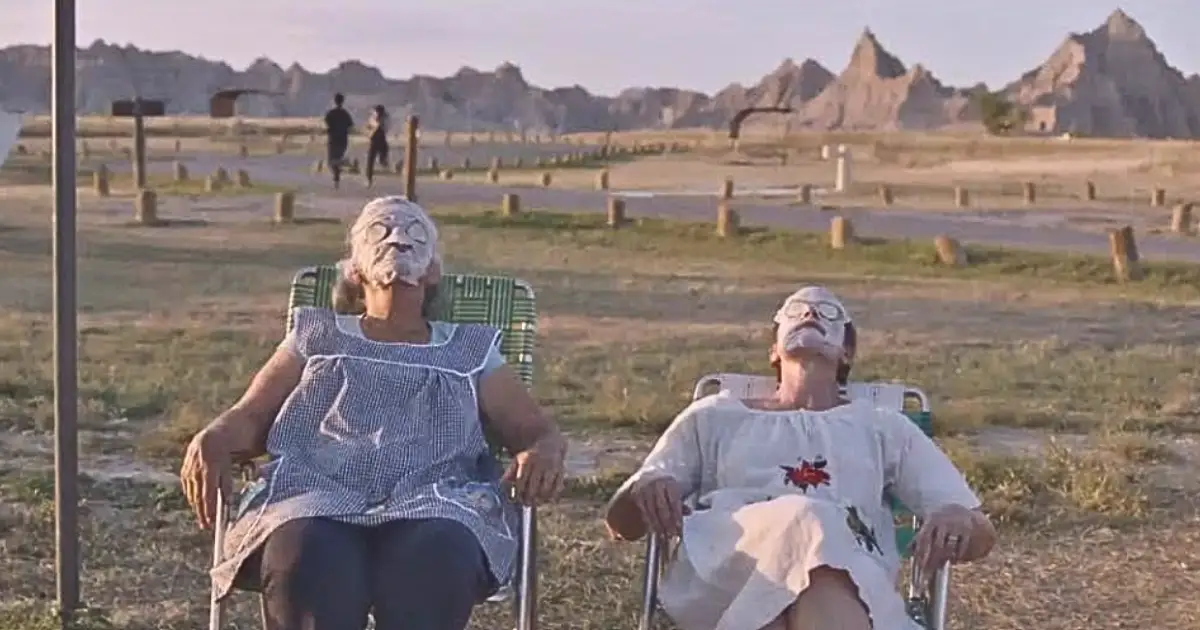
What is freedom worth when the world as you know it collapses?
Nomadland, directed and written by Chloé Zhao and released in 2020, is a lyrical American drama that redefined what cinematic storytelling can be when empathy is placed at its center.
Based on the 2017 nonfiction book Nomadland: Surviving America in the Twenty-First Century by Jessica Bruder, the film follows Fern, portrayed by Frances McDormand, as she leaves her old life behind and travels across the United States in a van, encountering a loose community of modern nomads along the way.
My first experience with Nomadland was more than watching a movie — it was a quiet confrontation with loss, resilience, and what it means to belong somewhere in a world that often seems indifferent. The movie stayed with me long after the credits rolled.
Nomadland’s significance lies not just in its storytelling but in its cultural impact: from winning Best Picture at the Academy Awards to being recognised by audiences and critics alike as a landmark in 21st-century cinema.
This film is also one of the 101 must-watch films mentioned on probinism.com, underlining its influence and importance in film history — and why Nomadland deserves an in-depth look here.
Nomadland’s language is simplicity itself — a minimalist narrative that blossoms into something deeply rich — and its emotional depth makes it unforgettable.
Table of Contents
Background
Nomadland begins in the dust-choked remains of Empire, Nevada, a once thriving company town built around a large gypsum plant that shuttered during the Great Recession.
Fern, the protagonist, has lost her husband Bo and the means to stay in her home after Empire dies along with its industry.
Sitting amid the emptiness of boarded-up storefronts, she makes a choice that will set the tone for the entirety of her journey: to live a new kind of life, moving from place to place in her modest van.
This radical choice isn’t portrayed as romantic. It isn’t a cinematic freedom-fantasy akin to Into the Wild. Instead, it is the response of someone who has nothing left to lose but who doesn’t want to surrender her sense of self either. (
Fern’s life on the road is punctuated by seasonal work — picking beets on a farm, helping run a campground in the desert, and even clocking in at an Amazon warehouse — moments that show both dignity and grind in equal measure.
The plot unfolds as a series of gentle episodic moments rather than a traditional three-act structure. These moments form a mosaic of encounter and introspection: around flickering campfires, desert horizons, dusty RV meets, and improvised roadside meals.
Fern meets other nomads along the way — people who are both weathered and warm, characters who speak directly to the camera as themselves or blur the line between documentary and fiction, such as Linda May and Swankie, whose stories intertwine with Fern’s as shared lived experience.
In one evocative sequence, Swankie’s struggle with cancer becomes not just a personal tragedy but a profound meditation on answerability and impermanence: the community gathers at her memorial to honor her life, throwing stones into a fire in a ritual that feels as ancient as the desert wind itself.
These narrative vignettes move slowly but deliberately, creating space for the viewer not just to watch but to feel the quiet transformation that occurs in Fern. She isn’t running away, nor is she merely drifting; what she seeks, perhaps unknowingly, is a sense of belonging beyond bricks and mortar.
Nomadland (2020) Key facts
- Title: Nomadland (2020) — an American drama film.
- Director / Writer / Editor: Chloé Zhao — also produced and adapted the screenplay from Jessica Bruder’s nonfiction book.
- Based on: Nomadland: Surviving America in the Twenty-First Century by Jessica Bruder.
- Starring: Frances McDormand, David Strathairn, and real nomads (Linda May, Charlene Swankie, Bob Wells).
- Genre: American drama (road/realist).
- Runtime: 108 minutes.
- Budget / Box Office: $5M budget, ~$39.5M gross worldwide.
- Release & distribution: Venice Film Festival premiere (Sept 11, 2020); theatrical/streaming Feb 19, 2021 (Searchlight Pictures / Hulu).
- Critical acclaim: Universal praise; high scores on major aggregators (Rotten Tomatoes / Metacritic).
- Major awards: Best Picture, Best Director (Zhao), Best Actress (McDormand) at the 93rd Academy Awards; multiple Golden Globe, BAFTA wins.
Nomadland Cast
| Actor as Character | Description |
|---|---|
| Frances McDormand as Fern | The widowed former factory worker who loses her job and home and chooses a nomadic life, traveling the American West in her van while searching for purpose, dignity, and human connection after economic collapse. |
| David Strathairn as Dave | A gentle, reflective fellow nomad who forms a quiet romantic bond with Fern, representing an alternative path of companionship and emotional openness within nomadic life. |
| Linda May as Linda | A real-life nomad playing herself, who mentors Fern in practical van living and introduces her to the informal support systems that sustain the nomad community. |
| Charlene Swankie as Swankie | A charismatic and philosophical nomad who shares stories of adventure and mortality, profoundly shaping Fern’s outlook on freedom, aging, and acceptance of death. |
| Bob Wells as Bob Wells | A prominent real-world nomad and community organizer who acts as a spiritual guide figure, articulating the nomad ethos of resilience, mutual aid, and chosen family. |
| Peter Spears as Peter | A man Fern briefly connects with during her travels, highlighting the fleeting relationships and emotional transience that come with life on the road. |
| Gay DeForest as Gay | A nomadic companion whose presence reinforces the sense of shared struggle and solidarity among people living outside conventional housing and employment systems. |
| Patricia Grier as Patty | Another member of the nomad community, illustrating the diversity of backgrounds and personal histories that converge in the van-dwelling lifestyle. |
| Tay Strathairn as James | A supporting character connected to Dave’s family, representing the pull of settled life and the emotional costs of choosing freedom over permanence. |
Note: Many cast members are real nomads playing versions of themselves, a distinctive feature of Nomadland’s cast and storytelling.
Nomadland Plot
Fern’s journey continues across America’s wide-open landscapes, but what gradually becomes clear is that the road is not an escape; it is a way of surviving grief.
As Fern moves from desert camps to roadside jobs, the film quietly reveals fragments of her past through conversations rather than flashbacks. She once taught in Empire, shared a stable life with her husband Bo, and belonged to a town that vanished when the gypsum plant shut down during the Great Recession, leaving behind empty homes and broken routines .
The loss of Empire mirrors the loss of Bo, and Fern’s refusal to articulate her pain openly becomes one of the film’s defining emotional truths. She listens far more than she speaks, absorbing the stories of other nomads who have lost children, spouses, savings, or health, and who have chosen mobility not out of romance but necessity.
One of the most pivotal relationships Fern forms is with Dave, played by David Strathairn, another widower navigating life on the road.
Dave and Fern share a quiet intimacy built on shared silences, not grand declarations, and their chemistry feels lived-in rather than scripted. When Dave invites Fern to visit his family for Thanksgiving, the film shifts momentarily into the domestic sphere she has been avoiding.
At Dave’s son’s suburban home, Fern is offered warmth, stability, and something close to belonging. She is welcomed kindly, fed generously, and given a glimpse of a conventional future that includes companionship, comfort, and rootedness, but this environment also exposes how profoundly disconnected she feels from fixed domestic life.
During this visit, Fern admits that she and Bo lived in Empire not by choice but because it was all they could afford, and that Bo’s illness and subsequent death hollowed out any desire she had to rebuild a traditional home.
After Dave chooses to stay with his family permanently, Fern leaves quietly, unable to accept a life that feels like a compromise rather than a choice.
The decision marks a turning point: Fern consciously chooses the road not because she has nowhere else to go, but because she knows she cannot return to a version of life that no longer fits who she has become.
Her return to nomadic life is underscored by moments of hardship rather than triumph. Fern’s van breaks down, forcing her to confront the financial fragility of her lifestyle, and she is briefly reduced to desperation, seeking help from her sister before retreating once again into solitude.
In one emotionally raw sequence, Fern visits her sister’s comfortable home and realizes that although she is loved, she does not belong there. Her sister gently suggests she could stay, but Fern senses that permanence would suffocate her unresolved grief rather than heal it.
Fern’s refusal is not stubbornness but self-knowledge.
As winter returns, Fern travels back to Empire, Nevada, now completely abandoned, its zip code officially discontinued by the U.S. Postal Service — a factual detail that underscores the film’s documentary realism .
She walks through her old house, empty and stripped of life, revisiting the spaces where her marriage once existed. These scenes are filmed with stillness and restraint, allowing the audience to sit with the weight of memory rather than being guided emotionally by dialogue or music.
Fern’s visit to Empire is not about closure in a conventional sense; it is an acknowledgment that some losses cannot be repaired, only carried.
The film’s ending unfolds quietly but deliberately. Fern leaves Empire once more, driving her van back onto the open road, rejoining the nomadic circuit not as a woman running from pain, but as someone who has learned to live alongside it.
In the final scenes, Fern participates again in gatherings of nomads, exchanging practical knowledge and emotional support, reinforcing the film’s central idea that community does not require permanence. As Bob Wells tells the group, nomads do not say goodbye forever, only “see you down the road,” a line that encapsulates the film’s philosophy of impermanence and connection .
Nomadland ends without resolution in the traditional narrative sense, but with something far more honest: acceptance. Fern remains alone, but not lonely; rootless, but not lost; grieving, but no longer defined solely by loss.
The road continues, and so does she.
Nomadland Analysis
1. Direction and Cinematography
Chloé Zhao’s direction in Nomadland is deceptively simple, masking meticulous craftsmanship beneath a surface of apparent spontaneity.
Zhao adopts a restrained, observational approach that blurs the line between fiction and lived reality, allowing scenes to breathe rather than pushing them toward narrative payoff.
According to The Hollywood Reporter, her method gives the impression that moments simply “happen,” even though each frame is carefully constructed to capture light, geography, and emotional truth . This approach aligns with Zhao’s broader cinematic philosophy, one rooted in empathy rather than spectacle.
Cinematographer Joshua James Richards complements this vision by favoring natural light, wide landscapes, and patient framing that situates Fern as a small but resilient figure within vast American spaces.
The deserts, plains, and highways are not romanticized; they are shown as indifferent, beautiful, and sometimes cruel, reinforcing the film’s existential undertone.
The camera rarely intrudes, choosing instead to witness.
This visual language makes Nomadland feel less like a traditional drama and more like a moving portrait of America’s forgotten margins, where silence often communicates more than dialogue.
2. Acting Performances
Frances McDormand’s performance as Fern is one of the most quietly powerful portrayals in modern cinema.
McDormand strips away theatricality, delivering a performance built on micro-expressions, pauses, and physical presence rather than overt emotion.
According to The New York Times, Zhao’s camera “works magic with McDormand’s face,” allowing the audience to read layers of grief, resolve, and fatigue without exposition . Her portrayal resists sentimentality, making Fern feel less like a symbol and more like a fully realized human being.
David Strathairn’s Dave provides a gentle counterbalance, embodying warmth and vulnerability without undermining Fern’s independence. The real-life nomads — Linda May, Swankie, and Bob Wells — further ground the film, their unscripted authenticity lending credibility that no professional acting could replicate.
Together, these performances dissolve the boundary between actor and character.
3. Script and Dialogue
The screenplay, written by Chloé Zhao and adapted from Jessica Bruder’s nonfiction book, prioritizes emotional truth over narrative efficiency.
Dialogue in Nomadland is sparse and unpolished, often sounding like fragments of real conversation rather than crafted lines.
This choice slows pacing but deepens realism, allowing moments of silence to carry as much weight as spoken words. Critics at IndieWire praised this unhurried structure for creating a cumulative emotional effect rather than a conventional dramatic arc .
While some viewers may find the pacing deliberately slow, this restraint is integral to the film’s authenticity.
4. Music and Sound Design
Music in Nomadland is used sparingly, but when it appears, it resonates deeply.
Ludovico Einaudi’s minimalist piano compositions function less as emotional cues and more as atmospheric extensions of Fern’s internal state.
The score rises gently in moments of reflection, never overwhelming the visuals or dictating emotional response, according to IMDb’s soundtrack documentation .
Natural sounds — wind, engines, footsteps on gravel — are foregrounded, reinforcing the tactile reality of life on the road.
5. Nomadland Themes and Messages
At its core, Nomadland is a meditation on impermanence, loss, and resilience in post-recession America.
The film explores how economic collapse, aging, and grief intersect, particularly for older Americans left behind by systemic structures.
According to BBC News, the film resonated globally because it addressed social displacement without politicizing individual suffering. Rather than framing nomadism as rebellion, Zhao presents it as adaptation — a response to a world that no longer guarantees stability.
Another central theme is community without permanence. The nomads form bonds rooted in mutual aid and shared experience, rejecting the idea that belonging requires ownership or fixed geography. Bob Wells’ philosophy — that people don’t say goodbye, only “see you down the road” — encapsulates a worldview shaped by transience yet sustained by connection.
The film also interrogates the American myth of independence, revealing its costs alongside its freedoms. Fern’s autonomy is hard-won and fragile, reminding viewers that freedom often exists within constraint rather than outside it.
Ultimately, Nomadland suggests that home is not a place but a condition — one shaped by memory, acceptance, and movement.
Comparison
Nomadland inevitably invites comparison with other American road films, yet it quietly resists being confined to that tradition.
Unlike Into the Wild or The Motorcycle Diaries, which frame the road as youthful rebellion or ideological escape, Nomadland treats mobility as economic necessity shaped by grief and aging.
The film is also distinct from classic Depression-era narratives like The Grapes of Wrath, which rage against injustice; as one critic observed, Zhao offers “The Grapes of Wrath without the wrath,” replacing anger with observation and restraint . This tonal difference is precisely what makes the film feel contemporary rather than nostalgic.
Within Chloé Zhao’s own filmography, Nomadland feels like a natural evolution of Songs My Brothers Taught Me and The Rider, continuing her interest in non-actors, rural America, and lived authenticity.
What sets Nomadland apart is its broader emotional reach, combining documentary realism with a universal meditation on loss that resonates beyond geography.
Rather than telling a story about nomads, Zhao allows the audience to inhabit their rhythm.
Audience Appeal and Reception
Nomadland is not designed for casual viewing, yet it rewards patience with emotional depth.
The film primarily appeals to cinephiles, independent film enthusiasts, and viewers drawn to socially conscious storytelling. According to Rotten Tomatoes, 93% of critics responded positively, praising the film’s poetic portrayal of post-recession America, while Metacritic ranked it among the highest-rated films of 2020 .
Audiences seeking fast-paced narratives may find its deliberate pacing challenging, but those open to reflective cinema often describe it as profoundly moving.
Older viewers, in particular, may find the film’s exploration of aging, precarity, and dignity deeply relatable. At the same time, younger audiences often connect with its critique of economic systems that fail to provide long-term security, making Nomadland quietly intergenerational in its appeal.
This is a film that asks viewers to slow down, not look away.
Awards and Cultural Recognition
Few films in recent memory have achieved the level of critical and institutional recognition earned by Nomadland.
The film won the Golden Lion at the Venice Film Festival, the People’s Choice Award at the Toronto International Film Festival, and went on to dominate awards season globally.
At the 93rd Academy Awards, Nomadland won Best Picture, Best Director, and Best Actress, making Chloé Zhao the second woman — and first Asian woman — to win Best Director, according to BBC News . Frances McDormand also made history as the first person to win Oscars as both producer and performer for the same film.
Beyond trophies, the film’s cultural impact lies in its visibility. By centering older, economically displaced Americans without condescension, Nomadland expanded the range of stories considered worthy of prestige cinema.
Its legacy is as much about who it allowed to be seen as how beautifully it was made.
Personal Insight and Lessons
Watching Nomadland today feels less like revisiting a film and more like re-entering a quiet conversation about survival.
The film’s relevance has only intensified in a post-pandemic, inflation-strained world where job insecurity, housing precarity, and aging populations are no longer abstract issues but daily realities.
Nomadland does not lecture; instead, it listens, offering a mirror to a society where many people fall through the cracks not because they failed, but because the system quietly moved on without them.
According to BBC News, the film struck a chord globally precisely because it humanized economic displacement rather than sensationalizing it.
What resonates most personally is Fern’s refusal to define herself as either a victim or a hero. She does not romanticize her suffering, nor does she frame her lifestyle as a political statement.
In a culture obsessed with narratives of reinvention and hustle, Fern’s quiet endurance feels almost radical — a reminder that dignity can exist without success, stability, or applause.
The lesson here is uncomfortable but necessary.
Nomadland also challenges modern assumptions about home and belonging. In a world where ownership is often equated with achievement, the film asks whether permanence is always desirable — or even possible. Fern’s nomadic life is not free from pain, but it is honest, and that honesty becomes its own form of shelter.
Another deeply contemporary lesson lies in the film’s portrayal of community.
The nomads do not rescue one another, nor do they promise permanence, but they share resources, knowledge, and presence. In an age dominated by digital connection yet marked by loneliness, this form of temporary but sincere community feels both ancient and urgently modern.
The most enduring insight, however, is about grief. Fern never “gets over” Bo’s death; instead, she learns how to carry it without letting it define every step forward. Nomadland reminds us that healing is not linear, and that some losses simply become companions on the road rather than destinations left behind.
In this sense, the film becomes less about van-dwelling and more about emotional survival in late capitalism. It suggests that resilience is not about bouncing back, but about continuing — imperfectly, quietly, and with self-knowledge.
For me, Nomadland affirms that meaning does not always come from building something new, but from learning how to live honestly with what remains.
Nomadland Quotes
“Once you get this thing, you don’t stop,” Bob Wells says, explaining the nomadic impulse, and this line reframes the entire film not as a temporary phase but as a way of being.
Fern’s quiet admission that she and her husband lived in Empire because they “couldn’t afford anything else” strips away romantic myths of choice and exposes economic reality with devastating simplicity.
Perhaps the most defining line comes at the end: nomads do not say goodbye, only “see you down the road,” a philosophy that transforms impermanence from loss into continuity.
Pros and Cons
Pros:
- Deeply authentic storytelling grounded in real lives
- Frances McDormand’s restrained, career-defining performance
- Stunning natural cinematography that serves emotional truth
- Thoughtful social commentary without didacticism
Cons:
- Deliberately slow pacing may challenge some viewers
- Minimal plot progression may feel uneventful to mainstream audiences
Conclusion
Nomadland is not a film that ends; it lingers.
Chloé Zhao’s quiet masterpiece refuses easy catharsis, choosing instead to sit with uncertainty, grief, and endurance.
Through Fern’s journey, the film captures a version of America rarely centered in mainstream cinema — older, economically displaced, and resilient in ways that defy heroism. According to The Guardian and The New York Times, its power lies in empathy rather than spectacle, and that restraint is precisely why it endures.
What makes Nomadland extraordinary is its honesty. It does not ask the audience to admire Fern or pity her, only to witness her. That act of witnessing becomes transformative, reminding us that some lives unfold quietly, without resolution, yet remain profoundly meaningful.
This is cinema that trusts its audience.
As one of the 101 must-watch films featured on probinism.com, Nomadland earns its place not through grand statements but through its ability to reflect lived reality with grace. It is a film that feels increasingly relevant as economic uncertainty, housing instability, and aging continue to shape modern life across the globe.
Watching Nomadland is an act of slowing down, of listening, and of accepting that not all journeys are meant to arrive somewhere.
It stays with you because it speaks softly — and truthfully.
Final Recommendation
Nomadland is a must-watch for viewers who value thoughtful, human-centered storytelling over conventional plot mechanics.
It is especially recommended for cinephiles, independent film lovers, and anyone interested in films that explore social realities with compassion rather than commentary. Casual viewers seeking fast-paced entertainment may struggle, but those willing to engage will find it deeply rewarding.
This is not just a film to watch — it is a film to experience.
Rating
★★★★½ / 5
