
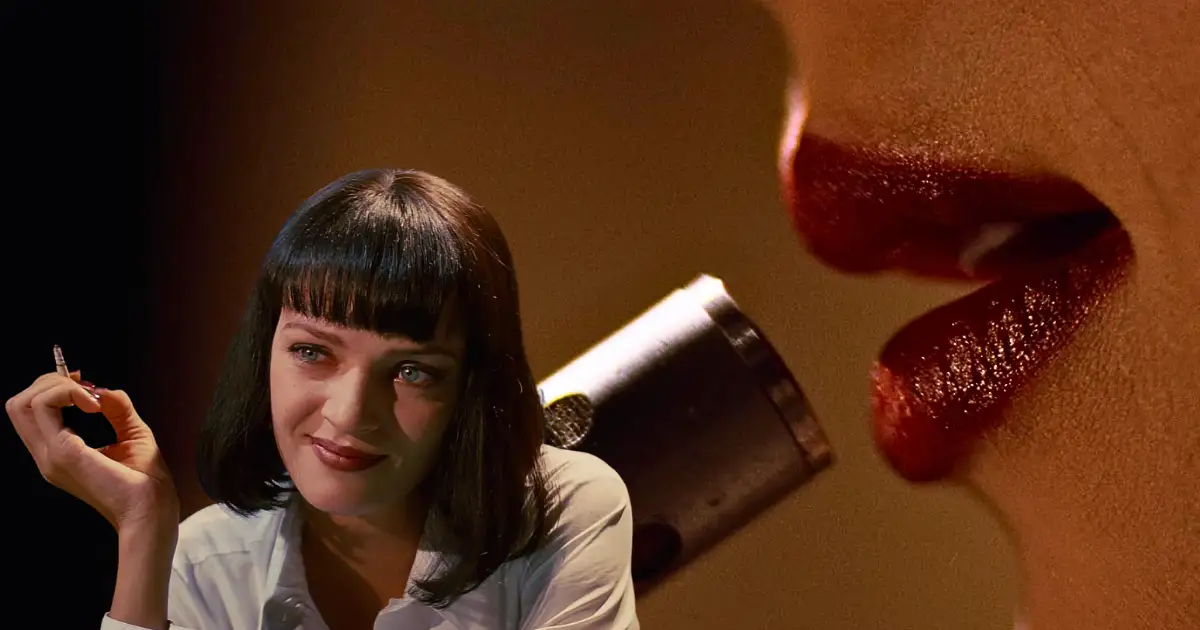
What if a crime film could feel like a philosophy seminar that happens to involve guns, diners, and a dance floor. Pulp Fiction (1994), written and directed by Quentin Tarantino, is an American independent crime film that scrambles time on purpose and dares you to keep up.
It premiered at Cannes on May 21, 1994 and opened in the United States on October 14, 1994, and its mix of irony, violence, and everyday talk helped redraw the map for 1990s filmmaking. I return to it the way I return to certain books, not for comfort but for the strange clarity it gives me about choice, consequence, and the stories we tell ourselves.
The film took the Palme d’Or at the 1994 Cannes Film Festival and later earned seven Academy Award nominations, winning Best Original Screenplay for Tarantino and Roger Avary. On a budget in the eight to eight and a half million dollar range, it grossed about 213.9 million worldwide, which still astonishes me because it is so talky, so odd, and so proudly un-slick.
It also sits on my own list of 101 must-watch films, because some movies do not just entertain, they change the way your brain edits reality.
Table of Contents
Background
Before the plot knots itself into that famous loop, it helps to know what kind of cultural moment Tarantino was stepping into.
Tarantino wrote the script in the early 1990s and built it from four intertwining tales of crime and violence in Los Angeles, each one more like a short story than a conventional act break.
Even the title sequence announces the method by giving dictionary definitions of “pulp,” one about cheap lurid fiction and one about a soft shapeless mass, which is basically a mission statement for the film’s tone and structure.
The plot runs out of chronological order, so deaths do not always stay dead and cause and effect feels like something you assemble by hand. According to Britannica, the movie’s influence comes from its nonlinear plot, vibrant pop culture dialogue, and a comical spin on violence in the criminal underworld.
I think that is why it still reads as modern, because it treats attention as an active verb.
The version that reached screens runs 154 minutes, shot by Andrzej Sekuła and edited by Sally Menke, and it looks richer than its budget suggests because the camera rarely wastes a glance.
That tension between ambition and thrift is part of its charm, like a roadside diner that somehow serves a meal you keep talking about for years.
From here on, I am going to spoil the story completely, including the ending that circles back to where it began.
Top Important Cast of Pulp Fiction
| Actor | Character | Analytical Importance |
|---|---|---|
| Samuel L. Jackson | Jules Winnfield | The philosophical core of the film; a hitman whose encounter with perceived divine intervention leads to moral awakening, embodying the theme of redemption and ethical choice. |
| John Travolta | Vincent Vega | A casually amoral hitman whose skepticism toward meaning and fate contrasts Jules’s transformation; his ironic death reinforces the film’s commentary on nihilism and consequence. |
| Uma Thurman | Mia Wallace | The enigmatic mob wife whose overdose sequence crystallizes the film’s tension between glamour and mortality, desire and danger. |
| Bruce Willis | Butch Coolidge | A boxer driven by inherited honor rather than criminal codes; his decision to rescue Marsellus marks one of the film’s clearest moral acts. |
| Ving Rhames | Marsellus Wallace | The embodiment of criminal authority and vengeance; his arc complicates power dynamics when he becomes both victim and judge. |
| Tim Roth | Pumpkin (Ringo) | A small-time criminal whose diner robbery frames the film; his encounter with Jules provides the narrative setting for mercy over violence. |
| Amanda Plummer | Honey Bunny (Yolanda) | Pumpkin’s volatile partner; represents impulsive criminality and emotional instability within the film’s opening and closing moral test. |
| Harvey Keitel | Winston Wolfe | The hyper-competent “cleaner” who restores order after chaos; symbolizes professional efficiency and pragmatic morality. |
| Maria de Medeiros | Fabienne | Butch’s girlfriend whose innocence and emotional dependence heighten the stakes of Butch’s decisions and underscore his humanity. |
| Eric Stoltz | Lance | The drug dealer whose panic-driven response to Mia’s overdose injects dark comedy while exposing the fragility beneath criminal bravado. |
| Rosanna Arquette | Jody | Lance’s partner; her presence grounds the overdose scene in domestic reality rather than criminal spectacle. |
| Christopher Walken | Captain Koons | Delivers the monologue about the gold watch, linking generational memory, trauma, and honor to Butch’s moral compass. |
Pulp Fiction Plot
Pulp Fiction is a 1994 American crime film written and directed by Quentin Tarantino, constructed as a deliberately non-linear narrative composed of interlocking stories set in Los Angeles .
Rather than progressing chronologically, the film fragments time, forcing the audience to assemble meaning from repetition, overlap, and ironic reversals.
The film opens in a diner where a petty criminal couple, Pumpkin (Ringo) and Honey Bunny (Yolanda), casually discuss the logistics of robbing establishments. Their conversation abruptly escalates into a robbery attempt. This scene functions as both the narrative prologue and, crucially, the epilogue, framing the entire film .
The narrative then jumps backward to follow Jules Winnfield and Vincent Vega, two hitmen working for crime boss Marsellus Wallace. Their task is to retrieve a mysterious briefcase stolen by a man named Brett.
On the way, they discuss mundane topics—European fast food, television pilots—establishing Tarantino’s signature contrast between casual banter and imminent violence.
At Brett’s apartment, Jules delivers his now-iconic pseudo-biblical monologue (misattributed to Ezekiel 25:17) before executing Brett. Moments later, a hidden gunman empties a revolver at Jules and Vincent at point-blank range—yet miraculously misses every shot. Jules interprets this as divine intervention, while Vincent dismisses it as coincidence .
This philosophical divide becomes central to the film’s meaning.
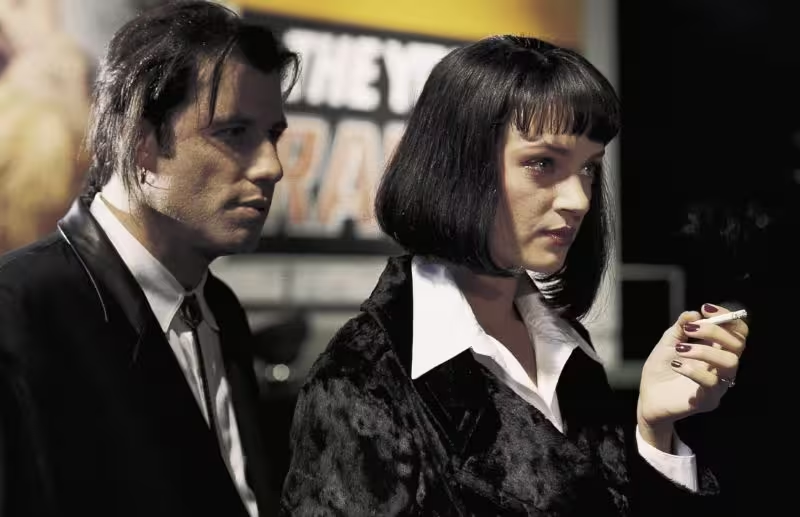
Another storyline follows Vincent on a separate assignment: escorting Mia Wallace, Marsellus’s wife, while Marsellus is out of town. Vincent is terrified of crossing an unspoken boundary, as rumors circulate about Marsellus’s violent response to perceived disrespect. Vincent and Mia share an evening that includes a retro diner, playful conversation, and a dance contest.
The night nearly ends in disaster when Mia accidentally snorts Vincent’s heroin, mistaking it for cocaine, and overdoses. In a frantic, darkly comic sequence, Vincent and his dealer revive her with a shot of adrenaline to the heart.
The two agree never to tell Marsellus, reinforcing the film’s recurring theme of secrets and survival through silence .
A third major storyline centers on Butch Coolidge, an aging boxer bribed by Marsellus to throw a fight. Butch double-crosses Marsellus, wins the bout, and kills his opponent accidentally.
Planning to flee Los Angeles with his girlfriend Fabienne, Butch returns to his apartment to retrieve a treasured family heirloom: a gold watch passed down through generations.
This decision proves fatal for Vincent, who has been sent to kill Butch. Emerging from the bathroom, Vincent is shot dead by Butch—ironically dying because of the same complacency that defines his character throughout the film .
Butch’s escape goes awry when he encounters Marsellus by chance. After a violent car crash, both men are captured by pawnshop owners Maynard and Zed, who imprison them in a basement.
Marsellus is raped, while Butch manages to escape. Instead of fleeing, Butch makes a moral decision: he returns to save Marsellus. Armed with a samurai sword, he kills Maynard and frees Marsellus, who executes Zed and declares his debt to Butch settled.
Marsellus orders Butch to leave Los Angeles forever, effectively granting him redemption through courage and honor .
The film’s final chronological events return to Jules and Vincent after the “miracle.” An accidental shooting in their car forces them to seek help from Winston Wolfe, a professional cleaner who restores order with ruthless efficiency.
Still shaken, Jules decides he will abandon crime. This decision culminates in the diner scene from the opening.
When Pumpkin and Honey Bunny attempt their robbery, Jules calmly intervenes. Instead of killing them, Jules reflects on his biblical speech and reinterprets it—not as justification for violence, but as a metaphor for moral choice.
He allows the robbers to leave with some cash, keeping Marsellus’s briefcase. Jules exits the diner determined to “walk the earth,” while Vincent—who earlier mocked the idea of divine intervention—returns to his violent life and, as the audience already knows, will soon die.
The ending is therefore paradoxical: the film concludes not with death, but with mercy. Chronologically, Vincent is already dead, but narratively, Jules’s moral awakening becomes the film’s final statement. Violence remains omnipresent, yet the possibility of redemption—however fragile—exists .
Pulp Fiction (1994) still feels like a film that walks into the room before you do, turns the conversation sideways, and somehow convinces you that this is the most natural way to tell a crime story.
Pulp Fiction Analysis
1) Direction and Cinematography: Tarantino’s direction is all about confidence—he treats the film like an “epic” even though it was made on a far smaller budget, and that ambition shows in how every scene feels staged with intent rather than filler.
He and cinematographer Andrzej Sekuła deliberately shot on very slow 50 ASA film stock to get a lustrous, almost no-grain image, which helps the movie feel crisp and strangely timeless even when it’s being ugly.
And structurally, the whole vision leans into controlled disorientation—Tarantino wants you alert, constantly re-mapping what you thought you understood.
2) Acting Performances: The cast works because nobody plays “cool” as an end in itself—they play people trying (and failing) to stay in control.
The film’s awards attention for performances wasn’t random: John Travolta, Samuel L Jackson, and Uma Thurman were all Oscar-nominated for these roles, and the movie is widely credited with reigniting Travolta’s career momentum.
I also love the behind-the-scenes detail that Bruce Willis reportedly sealed the deal with a blunt, comic commitment—“I’m in”—because it fits the film’s whole attitude toward fate and choice.
3) Script and Dialogue: The screenplay’s superpower is that it makes everyday talk feel like suspense, and it packages that talk into a deliberately out-of-order structure with seven narrative sequences that loop back on themselves.
4) Music and Sound Design: Instead of a composed score, Tarantino builds mood with a curated mix of surf, rock and roll, soul, and pop—right down to Dick Dale’s “Misirlou” blasting over the opening.
Comparison + Audience Appeal/Reception (and Awards): Compared with Reservoir Dogs, Pulp Fiction feels like Tarantino widening the canvas—more interlocking threads, more tonal whiplash, and (crucially) a soundtrack identity that even academic commentary contrasts with the more “mainstream nostalgia” approach of films like Forrest Gump.
It’s absolutely adult viewing (graphic violence, drug use, and sexual violence), but if you’re the kind of viewer who likes crime films, nonlinear narratives, and dialogue you can practically taste, the reception numbers tell you you’re in good company: Rotten Tomatoes lists a 92% critic score and 96% audience score, Metacritic shows a 95 metascore and 9.0 user score, it won the Palme d’Or at Cannes, and it won the Oscar for Original Screenplay.
Themes in Pulp Fiction: An Academic Essay
Introduction: A “Pulp” World Built from Fragments
Quentin Tarantino’s Pulp Fiction is frequently discussed not only as a landmark of 1990s American cinema, but as a text that performs its themes through form: a fractured chronology, intensified “movie” dialogue, and a constant oscillation between dread and absurdity.
The film’s thematic work is inseparable from its narrative design and aesthetic strategy. By shuffling cause and effect, Pulp Fiction turns morality into an interpretive problem—less a set of stable principles than a series of improvisations made under pressure.
Britannica’s overview captures the film’s thematic spine succinctly: despite its irreverent surface, recurring themes include vengeance and redemption, and characters repeatedly face moral consequences that “either save or cost them their lives.”
This essay expands that claim by arguing that Pulp Fiction stages redemption as a rupture within a broader postmodern environment: a world saturated by media references, stylized violence, and unstable meaning.
Redemption is possible—but only as a precarious decision within a culture repeatedly characterized, by critics and scholars, as nihilistic or morally flattened.
1. Postmodernism, Intertextuality, and the “World That Could Exist Only in the Movies”
A central thematic dimension of Pulp Fiction lies in its postmodern construction: the film draws attention to itself as a collage of styles, genres, and pop-cultural debris.
The Wikipedia-source critical discussion notes that the film’s “host of pop culture allusions” has led many critics to place it “within the framework of postmodernism,” calling it a “postmodern collage” that can seem to exist “only in the movies.”
This matters thematically because the film’s characters often communicate through borrowed idioms—catchphrases, genre codes, and media-savvy banter—rather than through psychologically “naturalistic” speech.
One critic reads the movie’s allure as a kind of romance built on “nonnaturalistic discourse,” “media-smart” and epigrammatic. In such a world, authenticity becomes difficult to locate: people perform themselves as if they were already characters.
Yet, the film’s postmodernism is not only empty pastiche.
Catherine Constable’s reading of the adrenaline-in-the-heart sequence (Mia’s overdose rescue) suggests that the scene simultaneously evokes and undermines older Gothic conventions, sustaining a more “inventive and affirmative” mode of postmodernism rather than a purely hollow one.
Thematically, this implies that even within an aggressively referential text, moments of consequence can still occur. The film is built from citations, but it does not entirely collapse into meaninglessness.
2. Nihilism as Cultural Atmosphere: “About … American Nihilism”
If postmodern collage is the film’s texture, nihilism is often described as its climate. A prominent scholarly formulation quoted in the Wikipedia PDF is Mark T. Conard’s blunt answer to the question of meaning: Pulp Fiction is “about … American nihilism.”
That claim resonates with the film’s repeated presentation of arbitrary death and contingency: Marvin’s accidental shooting, the near-miraculous survival of Jules and Vincent in the apartment, Vincent’s sudden death after leaving the bathroom, and the chain reactions triggered by a forgotten object (Butch’s watch).
Nihilism here does not simply mean that characters lack values. Instead, it describes a broader condition: moral categories are unstable, and significance is constantly threatened by spectacle, joke structure, and the flattening effect of “cool.”
Robert Kolker’s critique, as summarized in the same critical section, frames the film’s postmodernism as “surfaces,” where event and character are “in a steady state of reminding us that they are pop-cultural figures.”
In this view, the film’s violence and provocations are insulated from ethical seriousness because the text continually signals itself as style.
This interpretation is not the only one, but it identifies an important thematic tension: if the film is a machine of cinematic pleasure, can it also stage genuine ethical transformation—or does it merely simulate it?
3. Violence, Comedy, and the Problem of Moral Consequence
Pulp Fiction is notorious for violence that is frequently played as comic. Britannica emphasizes that most scenes are punctuated by violence with a “comical rather than fearsome or menacing tone,” while noting an exception in the pawnshop torture sequence.
This tonal pattern is not merely stylistic; it is thematic. By inviting laughter or “cool” enjoyment during brutality, the film forces the audience into an uneasy position: amused witness, complicit consumer, or moral judge?
Critics differ sharply on what this achieves. Henry A. Giroux’s argument, asserts that Tarantino “empties violence of any critical social consequences,” offering shock, humor, and irony “without-insight.” In this framing, violence becomes a spectacle that the viewer consumes rather than interrogates—an aesthetic thrill detached from ethical consequence.
Other readings locate subversion in the same technique. Alan Stone argues that the film’s “absurd dialogue” can “transform the meaning of the violence cliché,” “unmasking” macho myth and “deheroiciz[ing]” the power trip glorified by standard Hollywood violence.
Under this interpretation, the comedy does not merely numb the viewer; it punctures the self-serious mythologies that often legitimize cinematic violence.
What matters for theme is the conflict between these two possibilities: either the film critiques violence by making it ridiculous, or it evacuates violence of moral consequence by aestheticizing it. Pulp Fiction keeps both readings in play, and that ambiguity is itself part of the film’s thematic signature.
4. Redemption, Grace, and the Ethical Break in Jules’s Arc
Against the background of nihilism and stylized brutality, redemption emerges not as a sentimental promise but as a disruptive event. Britannica explicitly identifies redemption as a theme and describes characters engaged in “inner moral battles” whose choices can save or doom them.
The film’s most explicit redemption narrative belongs to Jules, whose shift from ruthless hitman to would-be pilgrim culminates in the diner scene.
The film’s theological language is itself complex: Jules’s signature monologue is presented as Ezekiel 25:17, but the American author Mark T. Conard notes in his The Philosophy of Film Noir that the passage is partly fabricated and adapted, with significant inspiration traced to Sonny Chiba’s Karate Kiba (The Bodyguard).
This matters because Jules’s “scripture” is already a media object—a stylized creed with cinematic lineage. His morality, at first, is performance: he admits he says it because it is “just a cool thing to say,” and only later reinterprets it.
Scholars again split on whether this conversion is meaningful or merely another performance. Paul Gormley (as quoted) suggests that Jules becomes linked to “a place beyond postmodern simulation,” framed in the film as God, precisely because he moves beyond using the speech as stylish costume.
Adele Reinhartz similarly emphasizes that the depth of Jules’s transformation is shown by the contrast between his first delivery of the passage (fury and self-righteousness) and his later reflective parsing of its meaning “in true postmodern fashion,” offering multiple interpretations of how it applies.
But skepticism persists. Jonathan Rosenbaum (as quoted) considers the spiritual awakening “a piece of jive” inspired by kung-fu movies—emotionally satisfying perhaps, but not necessarily wise or ethically grounded.
Thematically, the film does not fully resolve this debate. Instead, it dramatizes what redemption looks like in a culture of simulation: even moral language is mediated by genre, by performance, by borrowed texts.
Yet the diner scene still functions as an ethical climax because Jules chooses restraint when violence would be easier. The film suggests that redemption may not require pure origins; it may emerge from within the very machinery of style—an improvised ethics in a world that rarely supports it.
A particularly illuminating comparative frame appears in Pamela Demory’s discussion, which reads Pulp Fiction alongside Flannery O’Connor’s grotesque religious violence, concluding that Tarantino, despite depicting degradation and crime, aims to show that “grace is still possible; there might still be a God who doesn’t judge us on merits.”
In this view, Pulp Fiction is not simply nihilistic; it is a narrative about the possibility of grace breaking through nihilism.
5. Objects, Codes, and Moral Structure: The Watch, the Briefcase, the Sword
Another way the film explores meaning is through objects that organize characters’ choices. The briefcase is paradigmatic: Tarantino has said there is “no explanation” for its contents; it is a “MacGuffin,” a pure plot device, shot with an otherworldly glow created by a light bulb.
Thematically, the briefcase represents a vacuum at the center of desire: everyone wants it, but its “meaning” is withheld. This absence becomes a postmodern emblem—an “unexplained postmodern puzzle,” inviting projections and theories.
But if the briefcase is empty meaning, the gold watch is inherited meaning—history, obligation, and identity passed through generations. Britannica highlights Christopher Walken’s monologue about the watch as a bizarre speech that reveals itself as crucial, complicating Butch’s escape.
Butch’s decision to retrieve the watch is irrational in survival terms; he risks his life for an object. Yet thematically it signals that he is not purely governed by nihilistic self-interest. He has attachments that operate like a moral code.
This is reinforced in the pawnshop sequence when Butch chooses to return and save Marsellus. One scholar’s reading interprets Butch’s eventual selection of the katana as aligning him with “honourable heroes,” while Conard argues that the earlier weapons symbolize nihilism that Butch rejects; by contrast, the Japanese sword represents a culture with a “well-defined moral code,” connecting Butch to a more meaningful approach to life.
In this symbolic structure, Pulp Fiction is not value-free: it contrasts empty spectacle (the easy violence of guns) with a more coded, honor-based violence (the sword) that is narratively linked to rescue rather than domination.
6. Mass Culture and “Telephilia”: Living Inside the Screen
Finally, Pulp Fiction thematizes mass culture not only by referencing it but by portraying it as an environment characters inhabit. The critical discussion notes that some argue the film resembles a simulacrum of daily television exposure—“we watch, laugh, and remain with nothing to comprehend.”
Robert Miklitsch’s quoted analysis describes Tarantino’s generation as shaped centrally by television, and lists the many TV programs referenced in the film, suggesting the movie’s sensibility may be closer to mainstream network programming than to high-art cinephilia.
This “telephilia” is thematically important because it reframes the film’s moral universe. If characters live inside recycled media forms, then ethics itself risks becoming just another genre. Jules’s scripture is part Bible, part martial-arts cinema; the briefcase glow echoes earlier noir imagery; the film’s talk is dense with references.
In such a world, the struggle is not simply to choose good over evil, but to find a framework of meaning that is not instantly swallowed by “cool” performance.
Conclusion: Redemption as an Event Within Postmodern “Cool”
Taken together, the sources portray Pulp Fiction as a text balanced on a thematic knife-edge. On one side lies postmodern surface play and the risk of nihilism—violence as joke, morality as style, meaning as projection.
On the other side lies the insistence—made explicit in both Britannica’s framing of “vengeance and redemption” and in scholarly readings of Jules and Butch—that decisions can still carry ethical weight.
The film does not propose redemption as purity or resolution. Instead, it proposes redemption as interruption: a choice that breaks the loop, however briefly, inside a culture of simulation.
Whether one views Jules’s transformation as genuine grace or as yet another genre performance, the narrative grants it thematic primacy by placing restraint—rather than bloodshed—at the film’s culminating moment.
In this sense, Pulp Fiction is not merely about violence; it is about what it means to reframe violence, to step outside its scripts, and to attempt—against the grain of nihilistic cool—to “walk the earth.”
Personal Insight and lessons
When I think about Pulp Fiction (1994) today, I think less about the violence and more about the moments when someone doesn’t do what the genre expects.
It’s a crime film that keeps asking whether a person can change without applause or a clean reset button. Jules doesn’t “become good” in a cinematic way; he becomes uncertain, and that uncertainty is the start of something real.
According to Britannica, the film’s power comes from its nonlinear design, pop-culture dialogue, and the way it twists underworld violence into something darkly comic—yet that comedy never fully shields the characters from consequence.
What lands for me is how the movie treats meaning like a choice rather than a fact. The “miracle” debate after the apartment shooting is basically two worldviews colliding: one person insists the universe is random, the other insists randomness is a message.
That argument feels even more current now, because we live in an era where people constantly interpret events into narratives—online, at work, in politics, in our own private anxieties.
The lesson I carry from Jules is simple and annoyingly difficult: you can interrupt your own momentum. The diner scene matters because it’s not a courtroom, not a church, not a therapy session; it’s a normal place where a decision has to be made fast and publicly. And that is what moral choice often looks like in real life—messy, loud, and surrounded by people who would rather you just “handle it” the old way.
Butch’s arc hits me differently, because it’s about responsibility even when you’ve already been paid to be irresponsible.
He could leave Marsellus in that basement and the plot would still “work,” yet he turns back, and the film frames that turn as the line between being merely alive and being able to live with yourself. That’s why the rescue plays like a nightmare version of honour: he chooses decency inside a story that rewards selfishness. In a culture that often prizes winning over integrity, Butch’s choice feels like a grim reminder that survival and self-respect don’t always point in the same direction.
I also think Pulp Fiction is a warning about aestheticising chaos, and it’s a warning Tarantino delivers while making chaos look seductive. The dialogue is magnetic, the soundtrack is addictive, the scenes are staged like pop icons—and the film knows exactly how easy it is to confuse style with substance.
According to the BFI, the movie remains riotously entertaining, packed with quotable dialogue and pop-culture references that pulled a new generation toward things like Dick Dale and the recurring “MacGuffin” mystery of the briefcase.
That matters now because we live in a world where “the clip” often outruns “the context.”
People quote the lines, meme the moments, and replay the dance, but the film’s emotional spine is actually fear: fear of humiliation, fear of death, fear of being seen as weak, fear that you’ve built your whole identity on a job you can’t morally defend.
And under that fear sits a more modern anxiety—what happens when your attention is trained to chase stimulation, but your conscience still wants a reason.
In that sense, the film’s scrambled chronology feels like a portrait of the distracted mind: meaning arrives out of order, and you have to assemble it anyway.
Maybe that’s why it ended up in the U.S. National Film Registry in 2013, which recognises films for cultural, historic, or aesthetic significance.
Pros and Cons
My pros and cons are really about what the film makes possible for you as a viewer.
Pros:
- Stunning visuals
- Gripping performances
- Bold nonlinear storytelling that rewards attention
- Dialogue that turns “small talk” into tension
- Soundtrack choices that stamp scenes into memory .
Cons:
- Slow pacing in parts
- Some scenes are deliberately uncomfortable and may feel punishing rather than productive
- The tonal whiplash can be alienating if you prefer straightforward crime narratives
Conclusion
I don’t think Pulp Fiction is “great” because it’s cool; I think it’s great because it understands how people hide inside coolness.
It’s stylish, yes, but the lasting effect comes from the moral friction under the style: Jules trying to change, Butch choosing to return, Vincent refusing to evolve, and everyone living with the fallout.
It helps that the craft is so controlled—direction, cinematography, editing, and music all pushing the same strange energy. And historically, it’s hard to ignore what it achieved: it won the Palme d’Or at Cannes and later became significant enough to be named to the U.S. National Film Registry.
My recommendation is simple: a must-watch for crime-film lovers, cinephiles, and anyone curious about how a movie can turn structure itself into meaning.
Rating
4.5/5 stars.
Pulp Fiction (1994) FAQ
1) Pulp Fiction ending explained: what really happens in the diner?
Jules stops the robbery from turning into a massacre, chooses to let Pumpkin and Honey Bunny walk away, and frames it as his first real step toward changing his life. The film “ends” there emotionally, even though the timeline is deliberately scrambled.
2) Why does Pulp Fiction end where it begins?
Tarantino designs a loop so the diner scene plays like both a beginning and a conclusion, depending on what you already know about Jules. That circular structure is part of the film’s point: meaning arrives through perspective, not chronology.
3) Pulp Fiction timeline in order: is the opening scene actually the start?
No—the diner robbery scene happens around the middle of the story’s real-time sequence. Many timeline breakdowns place it after the hitmen’s morning “clean-up” stretch and before later events that the movie shows earlier.
4) Pulp Fiction briefcase meaning: what is inside the briefcase?
The film never reveals the briefcase’s contents, and that’s intentional. Britannica describes it as a classic “MacGuffin”—a story-driving object whose glow matters more than an official answer.
5) Why does the briefcase glow if the movie won’t explain it?
There’s no confirmed in-film explanation for the glow, which is why it fuels endless theories. The ambiguity supports the MacGuffin function: it keeps characters (and viewers) chasing significance.
6) How many storylines are in Pulp Fiction (1994)?
It’s commonly described as three main threads—Jules/Vincent, Vincent/Mia, and Butch—told as shuffled episodes that overlap. That fragmentation is the “puzzle” effect people remember.
7) Why is the story told out of order?
The non-linear structure makes you constantly re-evaluate what you’ve seen, and it lets the film create a “moral ending” (Jules’ choice) that lands hardest when placed late in your viewing experience. This is a major reason timeline explainers exist at all.
8) Is Ezekiel 25:17 in Pulp Fiction a real Bible verse?
Ezekiel 25:17 exists, but the speech Jules recites is heavily modified: sources note that only the final portion resembles the biblical verse, while much of the monologue is fabricated from other phrasing.
9) What does “Royale with Cheese” mean in Pulp Fiction?
It’s a joke about how product names change across countries—specifically how a Quarter Pounder is named in France—used to make hitmen sound like normal people. The exchange is so iconic it’s even included as dialogue on the soundtrack releases.
10) Pulp Fiction soundtrack: does the film have an original score?
No—Wikipedia notes there’s no composed score; Tarantino uses an eclectic set of existing songs to shape tone and rhythm. That curated-soundtrack identity is part of the film’s signature.
11) What song plays at the start of Pulp Fiction?
Dick Dale’s surf-rock version of “Misirlou” plays over the opening credits. It’s repeatedly credited as the track that helped stamp the film’s energy into pop culture memory.
12) Why is “Misirlou” so associated with Pulp Fiction (1994)?
The track is prominently featured at the opening, and coverage of Dick Dale’s legacy notes the film gave the song (and Dale) a major renewed audience. It’s one of those rare needle-drops that becomes inseparable from a movie’s identity.
13) What are the most quoted lines from Pulp Fiction—and why do they stick?
BFI highlights the film’s “endlessly quotable dialogue,” and that’s partly because Tarantino writes everyday speech with the rhythm of punchlines and threats. People quote it because it sounds casual and sharp at the same time.
14) Does Vincent Vega die, and why is he still alive later?
Yes, Vincent is killed in the Butch storyline, but he appears later because those scenes occur earlier in the story’s chronology. The out-of-order structure makes death feel like a narrative checkpoint, not a final stop.
15) Is Pulp Fiction based on a book?
No—the film is an original screenplay written by Quentin Tarantino and Roger Avary, not an adaptation. That originality is part of why it’s often discussed as a landmark 1990s indie crime film.
