
What if the cost of getting ahead at work was sleeping on the street outside your own front door?
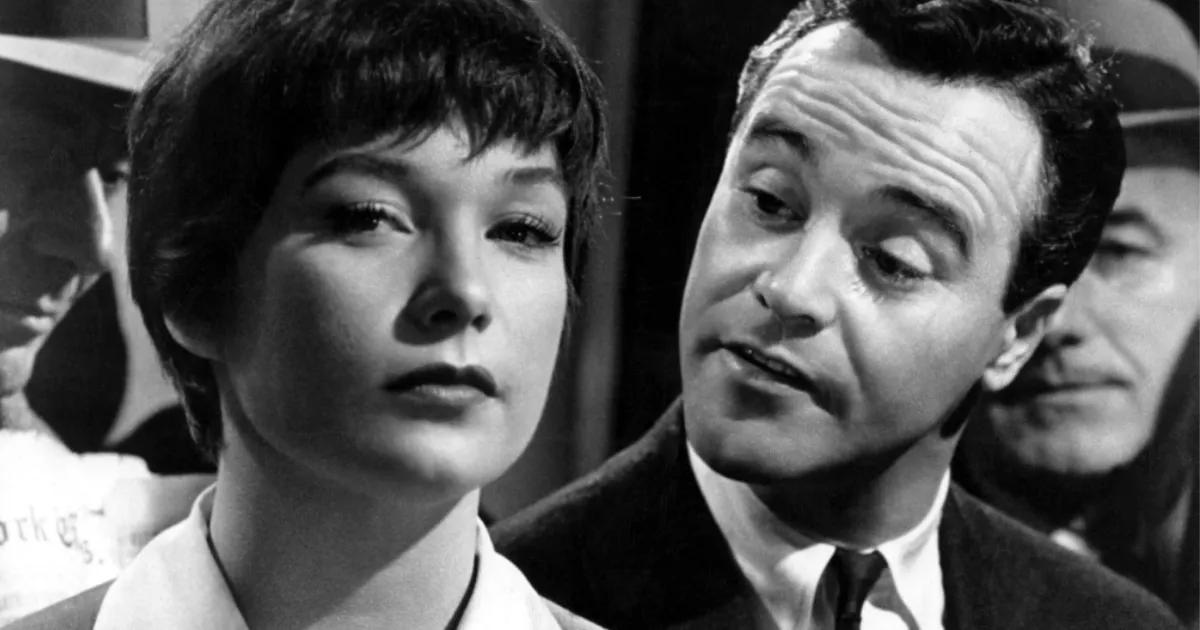
Billy Wilder’s The Apartment (a comedy-drama with a romantic pulse) arrived in 1960 and still feels uncomfortably current, because it frames office ambition as something you can literally rent out by the hour. It stars Jack Lemmon and Shirley MacLaine in a New York story that looks light on the surface and then quietly deepens into moral weather.
Rotten Tomatoes lists its original theatrical release date as June 15, 1960, with a runtime of 2 hours and 5 minutes.
My overall impression is simple: this film is both kinder and crueller than you expect. It makes you laugh, and then it leaves you alone with what the laughter was covering up.
I also count it as one of the 101 must-watch films I keep returning to.
It went on to win Best Picture at the 33rd Academy Awards, and that fact never feels like trivia when you watch how boldly it balances romance with an almost surgical cynicism.
The Library of Congress later added The Apartment to the National Film Registry (1994), which makes perfect sense to me, because it preserves a whole ecosystem of mid-century work life in a single frame.
The American Film Institute also places it on AFI’s “100 Years…100 Movies” list at number 80, which is a nice way of saying the film has become part of the American cinematic backbone. Modern aggregators don’t treat it like a dusty classic either: Rotten Tomatoes shows a 93% Tomatometer, and Metacritic shows a 94 Metascore.
In this review, I’m going to move from context to a full-spoiler plot retelling, and I’ll keep circling back to why The Apartment (1960) still lands emotionally.
Let’s start with where Wilder was standing when he made it.
Table of Contents
Background
Billy Wilder had already proven he could slice into human behaviour with a smile that looks polite until you notice the blade, and The Apartment is one of his most famous balances of bite and warmth. Encyclopaedia Britannica groups it among the major films in his career, and it’s easy to see why it’s often treated as a defining work rather than just another hit.
On paper, the premise sounds like a neat comedy hook: a small employee lends his place to executives and expects promotions in return. In practice, the film turns that “favour” into a slow moral corrosion that spreads through everyone involved, including the people who think they’re just having fun.
Wikipedia’s overview describes it as a romantic comedy-drama, and that hybrid label matters because the film keeps switching the emotional lighting without warning you first.
What I admire is that Wilder doesn’t pretend this is a story about “bad men” versus “good women,” or “innocent workers” versus “evil bosses.” He makes it about systems—how a workplace can teach you to call exploitation an opportunity until you can’t hear yourself think anymore.
The casting does a lot of silent work, because the faces feel familiar in a way that invites trust before the script starts challenging it.
AFI’s own entry (for its all-time list) even summarises the setup with a blunt clarity: CC “Buddy” Baxter is anonymous in a vast insurance company office, but his apartment key makes him interesting to the men above him. ([American Film Institute][5])
And because the film is so rooted in office rituals—parties, promotions, elevators, executive washrooms—it becomes a time capsule of corporate life that still resembles ours in the worst ways. Roger Ebert later pointed to the film’s vision of the “organization man” era, including that famous visual of desks stretching toward a vanishing point, which is exactly the kind of image that turns a workplace into a philosophy.
The film’s money story also hints at how widely it travelled: The Numbers lists a $3,000,000 production budget and $24,599,998 worldwide box office.
If you’ve read my Billy Wilder piece on Some Like It Hot, it’s fascinating to watch how Wilder pivots from outright farce to a romance that has bruises under the makeup.
Top 5 most important cast members for The Apartment (1960)
| Actor & Role | Role Description (AEO Style) |
|---|---|
| Jack Lemmon as Calvin “C.C.” Bud Baxter | The humble insurance clerk whose moral journey — from corporate go-between to self-respecting man — anchors the film’s emotional and ethical core. |
| Shirley MacLaine as Fran Kubelik | The elevator operator whose vulnerability, heartbreak, and resilience provide the heart of the story and illuminate the film’s romantic and thematic depth. |
| Fred MacMurray as Jeff D. Sheldrake | The suave yet morally compromised boss whose actions set the central conflict in motion, embodying workplace hypocrisy and power imbalance. |
| Ray Walston as Joe Dobisch | A senior colleague whose casual misuse of Bud’s apartment underscores corporate entitlement and the normalization of personal boundary violations. |
| Jack Kruschen as Dr. Dreyfuss | Baxter’s neighbor and moral compass, whose blunt guidance helps Baxter confront his ethical failings and realign with genuine human connection. |
The Apartment Plot
This is a story about a man who thinks he can bargain with his own dignity.
CC Baxter works at Consolidated Life Insurance in New York, one more suit in a sea of suits. He is not powerful, not admired, and not particularly noticed.
But Baxter has one asset that can’t be issued by Human Resources. It is a modest apartment on the Upper West Side.
A few executives discover the apartment and begin treating it like a private lounge. They borrow Baxter’s key for extramarital trysts and return it whenever they feel like it.
Baxter, hungry for advancement, tells himself it’s temporary. He imagines it as a ladder, one awkward rung at a time.
So he starts living like a man in exile from his own home. He waits in hallways, loiters outside in the cold, and walks the city at night just to give other people a warm room for their lies.
The building notices, of course, and that becomes its own kind of punishment. Neighbours whisper, and Dr Dreyfuss next door begins to suspect Baxter is some kind of relentless playboy, because the apartment sounds occupied even when Baxter is outside staring up at his own window.
At the office, Baxter’s life looks brighter than it feels. The very men using him start praising him in that oily way people praise a tool they don’t respect.
The most humiliating part is how “scheduled” the indignity becomes. Baxter starts managing overlapping “appointments,” essentially running a side business where the product is privacy and the currency is a promise of promotion.
One night, an executive named Joe Dobisch insists on using the apartment while Baxter is sick. Baxter ends up sitting out in the rain and worsens his cold, which is both a small plot point and a big metaphor, because this is what it means to be disposable.
Meanwhile, Baxter has a quiet crush on Fran Kubelik, an elevator operator in the same building. She has a reputation among the executives as “hard to get,” which already tells you something ugly about how men at Consolidated discuss women like they’re office equipment.
Baxter finally builds up enough courage to ask Fran out. It’s not a grand romantic gesture, just a hopeful one, and that’s why it hurts when timing ruins it.
Baxter gets summoned by personnel manager Jeff Sheldrake, who confronts him about his “popularity.” Baxter thinks he’s about to be fired.
Instead, Sheldrake wants the key too.
Sheldrake is higher up, smarter about leverage, and more dangerous because he speaks softly. He promises Baxter an executive position if Baxter hands over the apartment, and Baxter—half sick, half thrilled—agrees.
That same night, Baxter has invited Fran to a play. Fran says she’ll meet him after she has a brief meeting with her “date,” because she is trying to end something.
The film’s cruelty tightens here. Fran’s “date” is Sheldrake.
Fran meets Sheldrake at a bar, telling him she cannot keep seeing a married man. Sheldrake gives her the familiar speech of the serial seducer, insisting he is just about to leave his wife.
While Baxter waits at the theatre like a hopeful fool, Sheldrake takes Fran back to Baxter’s apartment.
Baxter doesn’t know the identity of Sheldrake’s mistress yet, but he knows the shape of betrayal long before he has all the facts. The film makes you sit inside that ignorance, because it’s the kind of ignorance people live with every day when they don’t want the truth.
Soon Baxter receives his promotion, and the movie gives him a private office like a prize. The camera doesn’t let you enjoy it too much, because the promotion is built on a borrowed bed.
The other executives, annoyed that Baxter’s place is now monopolised by Sheldrake, grumble and threaten. Baxter clings to Sheldrake’s favour, because when you build your life around a powerful person’s approval, you become terrified of losing it.
Then the Christmas party arrives, and the office turns into a drunken carnival. Baxter is happy to see Fran there, and she looks like someone trying to survive a room full of noise.
Fran learns, just before the party’s emotional turning point, that Sheldrake has a pattern. His secretary, Miss Olsen, reveals that Sheldrake routinely seduces women at the office using the same lines, the same promises, the same future tense.
Fran is stunned in that particular way people are stunned when they realise they were never a unique love story, just an instalment. Baxter tries to talk to her, but she can barely hear him.
At some point, Fran pulls out her compact. Baxter recognises it as the compact Sheldrake’s “girlfriend” once left behind at the apartment.
It’s a small object, but it detonates everything.
Baxter goes to a bar and gets drunk with a woman named Margie MacDougall, not because he’s celebrating, but because he can’t bear to go home sober. Wilder shoots this despair with a light touch, and it’s almost unbearable because it feels like how people really cope.
Meanwhile, Sheldrake brings Fran to Baxter’s apartment for Christmas. Sheldrake gives Fran a gift: a $100 bill.
That gift is so perfectly insulting that it’s hard to breathe while watching it. It reduces romance to compensation, affection to hush money.
After Sheldrake leaves, Fran does not cry in a pretty, cinematic way. She swallows sleeping pills—Baxter’s pills—and collapses on Baxter’s bed.
When Baxter returns with Margie, the farce snaps into emergency. Baxter finds Fran and throws Margie out, then rushes next door for Dr Dreyfuss.
Dr Dreyfuss initially believes Baxter has driven Fran to suicide through his supposed womanising. Even while he helps save Fran, he scolds Baxter fiercely, which is one of the film’s sharpest moral moments: a man being judged for sins that are not exactly his, yet still connected to him.
Fran survives under Dr Dreyfuss’s care. Baxter tries to keep the situation quiet, partly to protect Fran, partly to protect his own fragile career.
But Dr Dreyfuss sees through the excuses and tells Baxter he should be “a mensch,” meaning a good human being. That line lands like a verdict and a lifeline at once, because Baxter has been living as something less than fully human, and he knows it.
Fran wakes up and overhears Sheldrake on the phone refusing to speak to her. Wilder lets you feel the humiliation in real time, not as melodrama, but as the slow realisation that you were never loved, only used.
Fran tries to leave, but Baxter gently keeps her there, insisting she’s not safe alone yet. The apartment becomes, for the first time, what it should have been all along: a place to recover.
Mrs Dreyfuss brings food and lectures, telling Fran to forget Baxter and marry a nice boy, which is both caring and tragically naive. The film keeps showing how everyone is trapped inside their own half-understanding of what decency requires.
Baxter and Fran begin spending time together in a quiet, domestic rhythm. They play cards.
They talk, not in sweeping declarations, but in fragments that reveal bruises.
An executive named Al Kirkeby turns up with his own girlfriend, sees Fran in Baxter’s bed, and assumes Baxter is finally enjoying the “playboy” life everyone suspected. He congratulates Baxter, which is a dark joke because Baxter’s “success” is built on a woman’s near-death.
Fran asks the question that sits at the bottom of the film like a stone: who would care if she died. Baxter tells her he would care, and it’s not a romantic line so much as a human one, the kind that matters because it’s true.
They eat together, talk about their disappointments, and start to look at each other as possible salvation rather than passing company. Baxter even tries cooking in that clumsy bachelor way—at one point using a tennis racket as a spaghetti strainer—because he wants to offer Fran something normal.
Fran’s brother-in-law Karl eventually barges in, alerted by office gossip. When it becomes clear that Fran overdosed, Baxter takes the blame to protect her reputation, and Karl punches him.
That punch matters. It’s a consequence Baxter accepts, and it’s also the first time he chooses pain for the sake of someone else rather than for the sake of promotion.
At the office, Sheldrake’s world begins to wobble. Miss Olsen, furious and perhaps ashamed of her own complicity, informs Mrs Sheldrake about her husband’s affairs.
Suddenly Sheldrake is kicked out of his home, and he responds not with repentance, but with logistics. He tells Baxter he intends to enjoy bachelorhood for a while and then settle back into Fran, as if Fran is a deferred benefit.
Baxter is promoted again—this time to Sheldrake’s assistant—with perks like an executive washroom key. Wilder makes these “rewards” feel disgusting, because they arrive exactly when Baxter is starting to understand what they cost.
New Year’s Eve approaches, and the film tightens its final moral screw. Sheldrake wants the apartment key for a party-night tryst with Fran.
This time Baxter refuses.
He quits, and he tells Sheldrake, plainly, that he has decided to be a mensch.
That decision is the real climax, because it’s a man rejecting the idea that career progress is worth moral collapse. Baxter goes back to his apartment, packs his things, and prepares to move, taking even the revolver he once bought in a moment of despair.
Fran, meanwhile, attends a party with Sheldrake and learns the truth in the only way that matters: Baxter quit rather than hand over the key.
For the first time, Fran sees love not as promises or money, but as sacrifice and respect. She slips out of the party and runs through the city toward Baxter’s building, which is one of those cinematic runs that feels less like romance and more like rescue.
On the stairs, Fran hears a loud crack. She thinks Baxter has shot himself.
She pounds on the door, terrified, only to discover the sound was just Baxter opening a bottle of champagne.
And then, in a quiet moment that refuses melodrama, they sit down at the card table.
Baxter starts to confess his love.
Fran cuts through the speech with one of the most perfect endings in American film: she tells him to “shut up and deal.”
The Apartment Analysis
What keeps surprising me about The Apartment (1960) is how its comedy never cancels the ache—it sharpens it.
Billy Wilder directs with the confidence of someone who knows exactly where the laugh ends and the moral bruise begins. The black-and-white style turns Manhattan into a bright maze of glass and shame, and it’s no accident that the film won Oscars for art direction, editing, and (most importantly) picture and direction. Even the Academy’s own record of the 33rd ceremony reads like a tidy summary of Wilder’s control: 10 nominations, 5 wins, including Best Motion Picture and Directing.
Jack Lemmon’s Bud Baxter is the rare “nice guy” performance that doesn’t beg for your sympathy—it earns it through small, embarrassed choices. Shirley MacLaine plays Fran Kubelik with a guarded warmth that feels lived-in rather than written, and that restraint is precisely why the darker turns land.
The script’s real brilliance is that it makes moral compromise sound practical, until the practicality starts to smell rotten.
Sound-wise, the film’s emotional punch comes less from showy design and more from the way quiet rooms suddenly feel too quiet when the party leaves.
Theme-by-theme, this is a story about power disguised as “opportunity,” and about loneliness disguised as “fun.”
The apartment is not just a location—it’s a transaction, a rented conscience, a place where the bosses don’t even have to pay in cash. Fran’s despair exposes what the office culture politely hides: people are treated as disposable, and women pay the highest price for men’s reputations.
Bud’s turning point isn’t heroic in a blockbuster way; it’s simply the moment he stops translating cruelty into career advice and chooses decency even if it costs him.
That’s why the ending hits: it doesn’t promise a perfect future, but it does show two people reclaiming themselves from a system that trained them to settle.
If you like Wilder, you can feel the same satirical backbone that runs through Sunset Blvd. and Some Like It Hot—glamour and jokes, yes, but always with a blade behind them.
The difference is that The Apartment is gentler in tone while being, in some ways, harsher in what it admits about everyday harm.
This will work for casual viewers who think they’re signing up for a romantic comedy, but it especially rewards cinephiles who enjoy films that look you in the eye and refuse easy innocence.
Audience appeal, reception, and awards
For me, the most telling thing about the film’s afterlife is that institutions keep returning to it—not as nostalgia, but as a standard.
At the Oscars, it won Best Motion Picture (Billy Wilder as producer), Directing (Wilder), Film Editing (Daniel Mandell), Art Direction (Black-and-White), and Writing (Story and Screenplay—written directly for the screen), with 10 nominations and 5 wins in total.
Those wins sit alongside major nominations for Lemmon, MacLaine, and Jack Kruschen, which is a pretty good indicator that the industry recognized both craft and performance as inseparable here.
And because the Oscars page lists the winners and nominees by film, you can see The Apartment stacked with its exact categories rather than vague “it won five.”
Across the Atlantic, it’s also credited as the Best Film winner at the 14th British Academy Film Awards (1961) on widely used award references, and Entertainment Weekly’s historical BAFTA Best Film winner list includes The Apartment among the winners.
Critic aggregation backs up the reputation too, with strong scores commonly reported on Metacritic and Rotten Tomatoes listings for the film. (Rotten Tomatoes)
It also has the institutional “this matters” stamp from the Library of Congress: The Apartment is listed in the National Film Registry.
Personal insight and lessons today
I keep thinking about how The Apartment predicts a very modern kind of loneliness: the kind that comes from being “useful” rather than being loved.
In Bud Baxter’s world, your value is measured by access—who can use your keys, your time, your silence. That idea doesn’t feel dated; it feels like a blueprint for any workplace culture where boundaries are treated as a lack of team spirit.
\The film’s corporate ladder isn’t climbed with skill so much as with availability, and the most uncomfortable truth is how easy it is to confuse that with ambition.
Fran’s story, for me, is the emotional center because it shows what happens when power dresses itself up as romance.
She’s not merely “heartbroken”; she’s trapped inside a social script that tells her to accept crumbs because the alternative is being alone. When the film moves into its darkest territory, it doesn’t do it for shock—it does it to make the audience stop laughing on autopilot and finally see the cost of casual selfishness.
The lesson I pull from Bud isn’t “be a hero,” because he’s not that kind of character.
It’s closer to: stop renting out your integrity in tiny, everyday ways and calling it strategy.
In 2025 terms, “the apartment” can be your password, your creative labor, your emotional bandwidth, your willingness to cover for someone else’s misconduct, your habit of saying “it’s fine” when it isn’t.
The film is blunt about how systems of advantage survive: not through monsters, but through ordinary people who keep the machine running because the machine offers them a little warmth.
Bud starts as a man who thinks he’s gaming the system, but the system is gaming him harder—he’s paying with sleep, dignity, and a private life that no longer belongs to him. Fran starts as a woman trying to be loved by someone who only visits her when it suits him, and the film refuses to romanticize that arrangement as “messy but passionate.”
What makes the ending feel earned is that both characters finally choose a different kind of courage: not the courage of winning, but the courage of refusing.
I also think the film is quietly instructive about the language of exploitation—how it’s always softened. Nobody says, “Let me use you”; they say, “You’re a good sport,” or “This could really help you,” or “Don’t be difficult.”
That’s why the screenplay’s reputation endures: it captures the way people talk when they’re trying to make something ugly sound normal, and it’s one reason the Writers Guild of America includes The Apartment on its 101 Greatest Screenplays list (and even references it as “#15” in its own materials).
Finally, the film’s compassion matters: it doesn’t demand perfection from Bud or Fran, but it does demand honesty.
That’s the part I find most usable today: you don’t have to fix the whole world to start living differently, but you do have to stop participating in the lie that your discomfort is the price of admission.
Pros and Cons
Pros:
- A razor-sharp blend of romantic comedy and moral drama that still feels contemporary
- Career-best central performances that make small choices feel life-or-death
- Craft excellence (writing, editing, art direction) recognized at the Oscars
Cons:
- The corporate satire can feel uncomfortably close to home, which some viewers may mistake for “too bleak”
- The tonal shifts demand attention; if you expect only light comedy, the darkness may hit hard
Conclusion
I come away thinking The Apartment (1960) is one of the rare classics that doesn’t just “hold up”—it quietly indicts the present tense.
It’s funny, but the laughter is always edged with consequence. It’s romantic, but the romance is never used as an excuse to forgive harm. It’s cynical about systems, yet strangely hopeful about individuals who decide to stop cooperating with their own diminishment.
If you want a neat moral, Wilder won’t give you one; what he gives you is better—a pair of characters choosing decency when decency is inconvenient.
For anyone curating serious film education (or simply working through your own 101 must-watch films list on probinism.com), this stays essential.
Rating-wise, I’d put it at 4.8/5: not because it’s flawless, but because it’s brave in exactly the ways most films avoid.
“
