
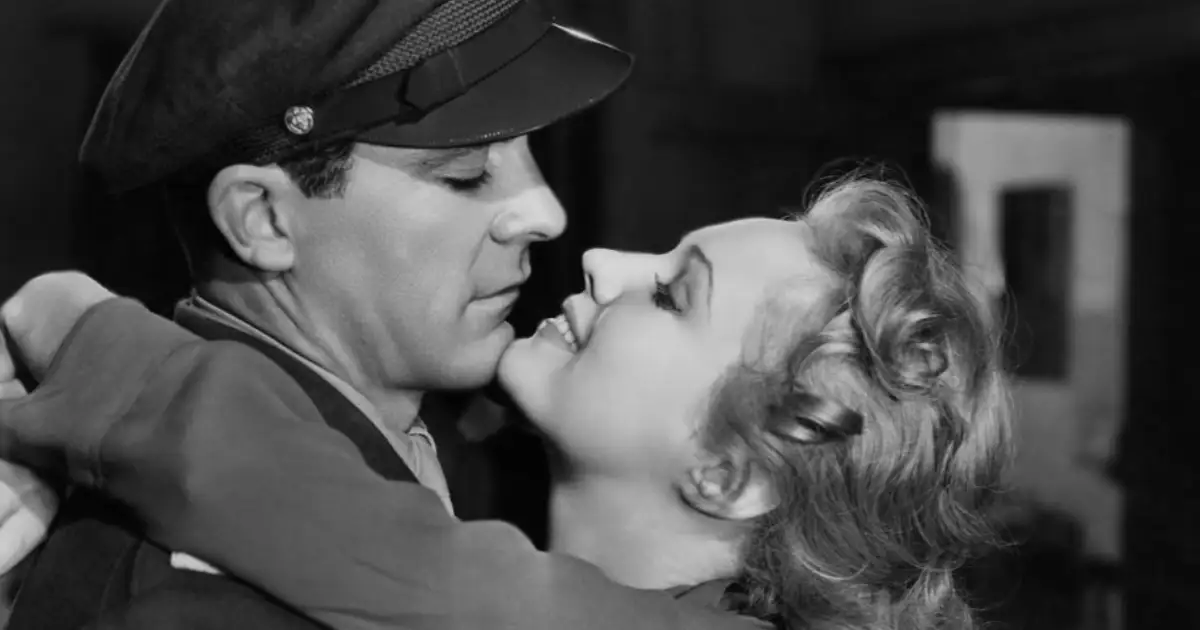
What does a nation owe the soldiers who return from its wars? This is the profound, aching question at the heart of The Best Years of Our Lives (1946), a film that holds a mirror to the American soul at a pivotal moment in history.
Directed by William Wyler and released just over a year after World War II ended, this drama is less a triumphant victory parade and more a sober, deeply humane examination of the fractures hidden beneath the surface of peace. To me, it is not merely a classic; it is a vital, living document of trauma, resilience, and the fragile process of coming home, whose emotional power remains undiminished nearly eight decades later.
It is, without question, one of the 101 must-watch films for any serious student of cinema and the human condition.
Table of Contents
Background
The Best Years of Our Lives was born from a potent convergence of artistic vision and timely social concern. Producer Samuel Goldwyn, inspired by a 1944 Time magazine article, commissioned a story about returning veterans.
The resulting novella, Glory for Me by MacKinlay Kantor, was adapted by Pulitzer Prize-winning playwright Robert E. Sherwood. Director William Wyler, who had himself flown combat missions filming the documentary Memphis Belle, brought an unflinching commitment to authenticity.
This extended to casting Harold Russell, a real veteran who had lost his hands, in a pivotal role.
Made for a significant budget of over $2 million and shot with groundbreaking deep-focus cinematography by Gregg Toland, the film was a monumental undertaking that aimed to capture the complex national mood with honesty and grace, eschewing easy patriotism for something far more enduring.
Top-important cast list for The Best Years of Our Lives (1946)
| Actor & Role | Role Description |
|---|---|
| Fredric March as Technical Sergeant Al Stephenson | The central figure of the trio, a seasoned Army sergeant struggling to balance post-war family life and newfound societal expectations after World War II. |
| Dana Andrews as Captain Fred Derry | A decorated Air Force captain returning home to find his marriage fractured and his future uncertain, representing many veterans’ struggles with reintegration. |
| Harold Russell as Petty Officer 2nd Class Homer Parrish | A real-life veteran who lost both hands in the war and delivers a deeply affecting, award-winning performance about disability, identity, and resilience. |
| Myrna Loy as Milly Stephenson | Al Stephenson’s wife, whose character reflects the emotional shifts families experienced during and after the war. |
| Teresa Wright as Peggy Stephenson | The daughter of Al and Milly, whose relationship with Fred illuminates post-war generational tensions and emerging social dynamics. |
| Virginia Mayo as Marie Derry | Fred’s wife, whose lifestyle choices while he was away underscore the personal costs of war on relationships. ( |
| Cathy O’Donnell as Wilma Cameron | Homer’s devoted fiancée whose persistence highlights the challenges and adjustments of love and commitment after trauma. |
| Hoagy Carmichael as Butch Engle | Homer’s uncle, offering warmth and grounded support, providing a bridge between veteran camaraderie and civilian life. |
The Best Years of Our Lives Plot
Three men, strangers bound by shared experience, share a B-17 bomber flight back to their fictional hometown of Boone City at the end of World War II.
Captain Fred Derry, an Air Force bombardioner, is returning to a hollow marriage with Marie, a woman who married him in a whirlwind and now prefers nightclubs to domesticity. Sergeant Al Stephenson comes home to a comfortable life, a loving wife Milly, and children Peggy and Rob, but finds his executive banking job and his own family feel alien after the intensity of combat.
Petty Officer Homer Parrish, who lost both hands and now uses mechanical hooks, returns to his supportive family and his sweetheart Wilma, paralyzed by the fear that his disability has made him a burden and shattered his future.
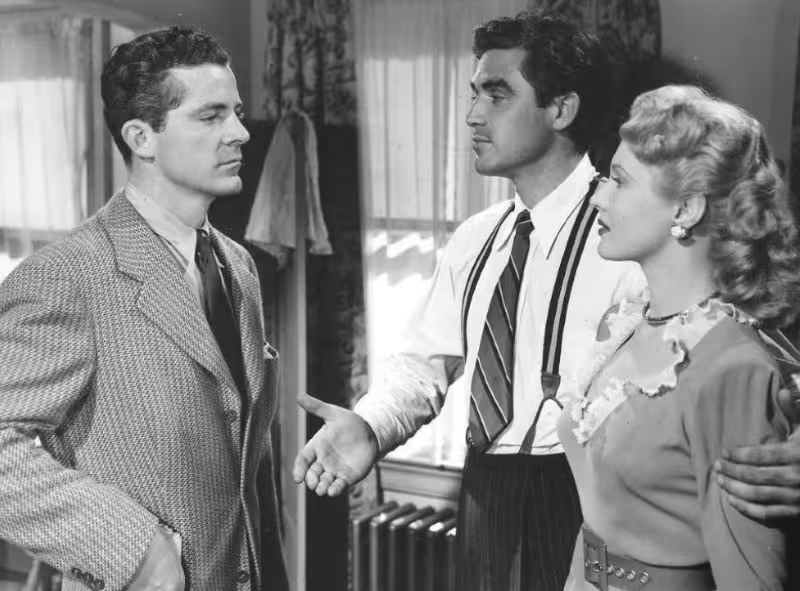
The film meticulously traces their parallel struggles. Al attempts to numb his dislocation with alcohol, culminating in a drunken, bitterly satirical speech at a bank banquet where he questions the logic of demanding collateral from a man who was asked to risk his life for free.
Fred, suffering from PTSD flashbacks, finds himself trapped in a dead-end job back at the drugstore soda fountain, his marriage crumbling under the weight of Marie’s materialism and his own lack of prospects.
His path fortuitously crosses with Al’s idealistic daughter, Peggy, and a quiet, mutual attraction blooms, creating tension with the protective Al.
Homer’s journey is the most intimately harrowing. Despite remarkable proficiency with his hooks, he is imprisoned by psychological shame. In a scene of devastating vulnerability, he shows Wilma the extent of his helplessness without his prosthetics, trying to push her away to spare her a life of care.
Her unwavering, compassionate love becomes his anchor. Fred’s life hits its nadir when he is fired from the drugstore after defending Homer from a patron who criticizes the war. Desperate, he wanders into a vast graveyard of scrapped warplanes, a powerful symbol of his own obsolescence.
Climbing into the bombardier’s seat of a gutted B-17, he is consumed by a traumatic flashback. He is jarred back to reality by a foreman who explains the planes are being melted down for prefabricated housing.
This moment of symbolic destruction and rebirth offers Fred a new direction, and he secures a job in this emerging industry. Meanwhile, Homer and Wilma marry in a tender ceremony that represents a hard-won victory over despair.
At the wedding, a now-divorced Fred reunites with Peggy. He offers not glamour, but a honest, difficult future, which she accepts with a joyful smile.
The film concludes not with grandiose solutions, but with fragile, hard-earned hope for its three veterans, each having begun the painful, imperfect work of rebuilding.
The Best Years of Our Lives Analysis
1. Direction and Cinematography
William Wyler’s direction is a masterpiece of restrained, empathetic realism. His vision was to create a living, breathing document of readjustment, achieved through an unwavering focus on character and environment.
He insisted on life-sized sets and had his principal actors wear their own clothes, fostering an unparalleled authenticity.
This approach is magnified by Gregg Toland’s legendary deep-focus cinematography, where foreground and background remain equally sharp.
In the iconic scene where Homer plays piano in the foreground while Fred makes a pivotal phone call in a distant booth, the technique forces the audience to actively choose where to look, mirroring the simultaneous, interconnected struggles of the characters and immersing us completely in their world.
2. Acting Performances
The ensemble cast delivers what feels less like performance and more like captured life. Fredric March embodies Al’s weary, whiskey-soaked cynicism with a profound depth, his eyes conveying a history of horrors he cannot voice.
Dana Andrews is perfect as Fred, his handsome flyboy facade cracking to reveal a core of shaken vulnerability and quiet dignity. Myrna Loy provides the film’s warm, stabilizing heart as Milly, while Teresa Wright’s Peggy is a beacon of post-war idealism and resolve.
The most groundbreaking performance comes from non-actor Harold Russell. His portrayal of Homer is devoid of sentimentality, radiating frustration, aching self-consciousness, and ultimate courage with a truth only lived experience could provide.
His chemistry with Cathy O’Donnell’s wonderfully gentle Wilma forms the film’s most emotionally pure and uplifting thread.
3. Script and Dialogue
Robert E. Sherwood’s adapted screenplay is the film’s robust skeleton, balancing three intricate narratives with flawless pacing over its nearly three-hour runtime. Its strength lies in its psychological acuity and refusal to sermonize.
The dialogue is natural, often understated, allowing subtext and emotion to flow beneath the surface of everyday conversations.
Al’s banquet speech is a standout, a brilliant piece of writing that weaponizes sarcasm to deliver a powerful social critique.
If the film has a weakness, it is perhaps a slight schematic neatness in its parallel plotting, but this is a minor quibble given the profound humanity each storyline achieves.
The script for The Best Years of Our Lives understands that great drama resides in the quiet moments of struggle, not just the dramatic peaks.
4. Music and Sound Design
Hugo Friedhofer’s Oscar-winning score is a character in itself, avoiding martial fanfares for a more nuanced, Americana-inspired soundscape. It swells with a bittersweet, longing quality, a musical expression of nostalgia for an innocence that can never be fully reclaimed.
The sound design subtly amplifies the psychological tension: the clatter of Homer’s hooks on a glass, the oppressive silence in Fred’s empty apartment, the ghostly echo in the aircraft boneyard. These aural textures ground the film in a tangible reality, making the characters’ internal struggles palpably external.
The music and sound in The Best Years of Our Lives never manipulate, but rather deepen the film’s immersive, authentic atmosphere.
5. The Best Years of Our Lives Themes and Messages
The Best Years of Our Lives tackles the monumental theme of societal and personal reintegration with unflinching honesty. It explores PTSD (then called “battle fatigue”), economic displacement, and the profound alienation of returning to a “normal” life that now feels foreign.
The film serves as a powerful commentary on the gap between public gratitude and private struggle, critiquing bureaucratic indifference through Al’s banking subplot. At its core, it is about the erosion and reconstruction of identity.
Homer must learn he is more than his disability, Fred must find worth beyond his uniform, and Al must reconnect with the man behind the sergeant’s stripes.
These themes resonate with a universal ache, speaking to anyone who has ever felt lost upon returning to a place they once called home.
Comparison
Compared to other post-war dramas of its era, which often leaned into noir cynicism or straightforward heroism, The Best Years of Our Lives is unique in its sprawling, novelistic compassion and domestic focus.
It shares Wyler’s meticulous craftsmanship with his earlier work like Mrs. Miniver, but replaces that film’s wartime solidarity with a more complex, fragmented peace.
In contrast to the frenetic energy of a film like The Men (1950), which also deals with a wounded veteran, Wyler’s approach is slower, more observational, and integrated into a broader social tapestry.
What sets it apart is its grand yet intimate scale, achieving the emotional depth of a great novel while remaining thoroughly, masterfully cinematic in its storytelling.
Audience Appeal/Reception
The film holds immense appeal for cinephiles interested in classic Hollywood, American history, and humanist drama.
Its length and deliberate pace may challenge casual viewers seeking fast-paced action, but its emotional rewards are limitless. Upon release, it was a staggering popular and critical success, becoming the highest-grossing film since Gone with the Wind and winning seven Academy Awards, including Best Picture, Best Director, and Best Actor.
Harold Russell made history by winning two Oscars for the same role. It maintains a 97% rating on Rotten Tomatoes and was selected for the National Film Registry in 1989, cementing its status as an enduring classic.
According to the BBC’s historical film analysis, it remains the definitive cinematic portrait of the post-WWII American experience.
Awards
The Best Years of Our Lives was a titan at the 19th Academy Awards, winning seven competitive Oscars: Best Picture, Best Director (William Wyler), Best Actor (Fredric March), Best Supporting Actor (Harold Russell), Best Adapted Screenplay (Robert E. Sherwood), Best Film Editing, and Best Original Score.
In an unprecedented move, Harold Russell was also awarded an honorary Oscar for “bringing hope and courage to his fellow veterans,” making him the only person to receive two Academy Awards for the same performance.
The film also won the Golden Globe for Best Picture and topped numerous critics’ lists, a clean sweep that reflected its overwhelming impact.
Personal Insight and Lessons
Watching The Best Years of Our Lives today is a deeply moving and surprisingly relevant experience. Its core lesson is that the battle does not end when the guns fall silent; the more complex war of reintegration is just beginning.
This resonates profoundly in our contemporary context, where we continue to grapple with the societal obligation to veterans of conflicts in Vietnam, Iraq, and Afghanistan. The film’s depiction of PTSD, often misunderstood in 1946, fosters crucial empathy for the invisible wounds of combat that persist today.
Furthermore, its critique of a system quick to celebrate heroes but slow to offer substantive support—be it through equitable banking, employment, or healthcare—feels urgently modern.
The Best Years of Our Lives teaches us that true support requires more than parades and platitudes; it demands a sustained, compassionate commitment to rebuilding lives, a lesson as vital for addressing today’s mental health crises and societal fractures as it was for welcoming home the Greatest Generation. It reminds us that healing is a community effort, not an individual burden.
The Best Years of Our Lives Quotes
- “I had a dream. I dreamt I was home. I’ve had that same dream hundreds of times before. This time, I wanted to find out if it’s really true. Am I really home?” – Al Stephenson, voicing the surreal dislocation felt by every returning veteran.
- “We’ll have to work at it. We’ll have to work at it every day of our lives.” – Peggy Stephenson to Fred Derry, offering not fairy-tale romance, but a sober, powerful commitment to building a shared future.
- (From Al’s bank speech): “We’re taught that the bank is the heart of the community. It pumps the lifeblood of commerce and industry. Well, maybe. But what’s the use of a heart if it’s cold?” – A searing critique of placing profit above humanity.
Pros and Cons
Pros:
- Unparalleled emotional depth and authentic, humane storytelling.
- Landmark, naturalistic performances from an impeccable ensemble cast.
- Gregg Toland’s revolutionary deep-focus cinematography that immerses the viewer.
- A historically significant and beautifully crafted script that tackles complex social issues.
- A timeless, powerfully moving exploration of trauma, resilience, and coming home.
Cons:
- Its nearly three-hour runtime and deliberate pace may test some modern viewers.
- The resolution, while hopeful, can feel slightly tidy for the immense problems it portrays.
- Some secondary characterizations, like Marie Derry, lean toward archetype.
Conclusion
The Best Years of Our Lives is more than a film; it is a national heirloom, a work of profound empathy that captures the soul of a generation with honesty, grace, and unwavering humanity.
William Wyler and his extraordinary team created not just superlative entertainment, but a lasting moral document on the cost of war and the courage required for peace. It is a masterpiece of American cinema that earns its title through heartbreaking irony and hard-won hope.
I recommend it without reservation as essential viewing, a deeply rewarding experience that lingers in the heart and mind long after the final frame. It is a cornerstone of the 101 best films you need to see.
Rating
5/5 Stars
