
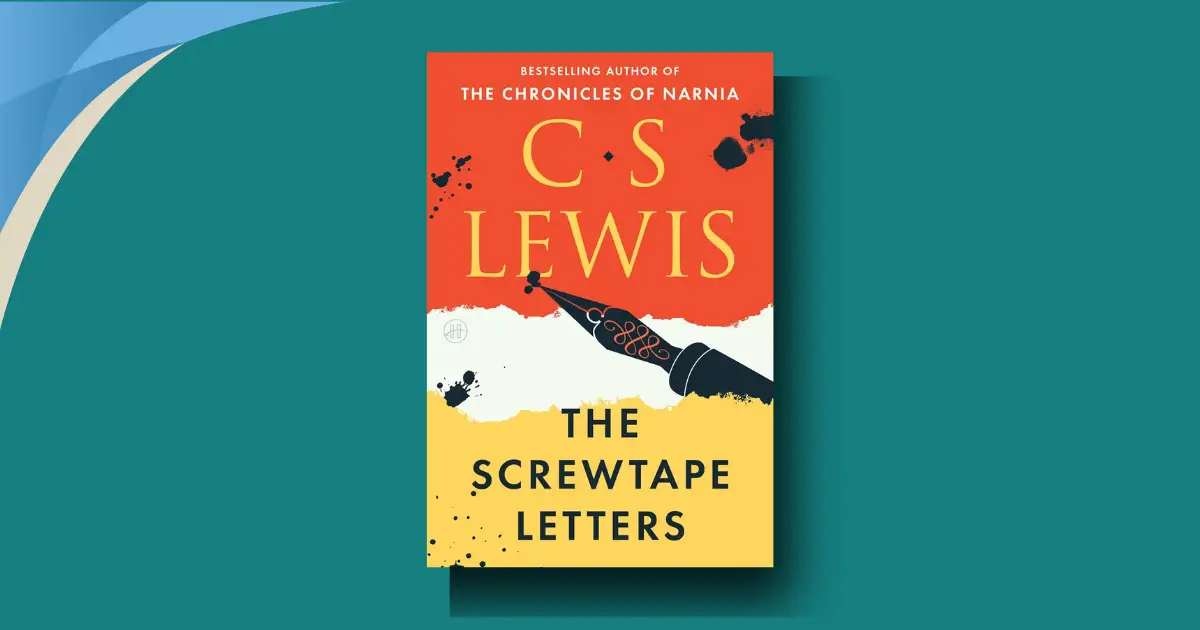
Ever wonder why you feel like you’re losing yourself even when everything looks perfect on paper? What if the “drift” is a path we’ve all walked, and the only way out is to see it for what it really is? The Screwtape Letters acts as a witty, unsettling mirror—but if a book can show you exactly how you’re shrinking, couldn’t it also show you how to grow back?
C.S. Lewis teaches spiritual self-awareness by letting a demon explain—step by step—how ordinary distractions, resentments, and “harmless” habits can hollow out a soul.
Lewis isn’t writing a psychology textbook, but his “temptation mechanics” map cleanly onto real behavior science:
- Tiny cues + repeated routines shape identity: A well-cited habit-formation study reported that building an automatic habit took about 66 days on average, with wide variation (from fast to much longer depending on person and behavior).
- Plans beat willpower: A large meta-analysis on implementation intentions (“If situation X happens, I will do Y”) found a medium-to-large average effect (d ≈ 0.65) across many tests.
- Lewis’s “gradual slope” strategy matches what research calls default drift: the most durable behavior change is often less about dramatic moments and more about repeated micro-decisions—exactly the territory Screwtape praises when he calls the “gradual” path safest.
The Screwtape Letters is Best for:
- Readers who like sharp satire that still cuts to the heart (Christian or not)
- Anyone battling distraction, cynicism, compulsive scrolling, resentment, or “busy emptiness”
- Book clubs, sermon-prep, worldview readers, and people who enjoy idea-driven fiction
Not for:
- Readers who want a conventional plot with lots of scene-setting (this is epistolary, not cinematic) (Probinism)
- People allergic to religious vocabulary (even though the insights are broadly human)
Table of Contents
1. Introduction
The Screwtape Letters is a short, razor-bright work of satirical fiction by C.S. Lewis, structured as letters from a senior demon (Screwtape) mentoring a junior tempter (Wormwood). Britannica describes it as a Christian, moral satire presented through correspondence—an “epistolary” setup that lets vice explain itself in its own voice.
Lewis frames the entire project with a warning: humans tend to make “two equal and opposite errors” about devils—either denial or obsession—both of which suit evil just fine.
2. Background and historical context
Lewis wrote The Screwtape Letters during World War II, and the book’s world carries that atmosphere: rationing, uncertainty, fear, propaganda, air raids, and the daily temptation to become smaller, meaner, and more self-protective.
The letters were first published serially in The Guardian in 1941 (May to November), then collected in book form in 1942—and the early reception was intense enough that it was reprinted multiple times that same year.
On my own site, I’ve written about how media can manufacture a “fantasy-world” that displaces reality—and I was struck to see that the piece explicitly links that critique to Lewis’s Screwtape, wishing the demon had skewered modern broadcasting too.
That connection matters: Screwtape’s strategy is attention warfare. The book isn’t mainly about “big evil.” It’s about how your mind gets gently trained to treat the superficial as urgent—and the important as optional.
3. The Screwtape Letters Summary
The premise: a demon’s coaching manual, disguised as letters
The entire book is a collection of letters written by Screwtape, a senior demon in a bureaucratic hellish department, to his nephew Wormwood, a junior tempter assigned to corrupt one human being: a man referred to simply as “the Patient.”
Lewis’s trick is wickedly effective: we never get the Patient’s direct narration. We only see him through the lens of an enemy trying to ruin him. That creates a strange reading experience: you learn what goodness looks like by watching evil sneer at it.
Early on, Screwtape lays down the first major tactic: keep the Patient thinking in labels, not realities. Screwtape says it’s “jargon” that does the work—language that replaces attention. In one of the book’s most quoted early stabs, he instructs Wormwood to rely on jargon instead of reason.
Simply: if you can make someone mock what they haven’t really examined, you can keep them lazy and loud forever.
Letter by letter: how Wormwood tries to steer the Patient away from faith
At the start, the Patient is sliding toward Christianity. Wormwood’s job is to prevent that. Screwtape’s advice is not to argue honestly—because direct argument might backfire—but to use diversion, social pressure, and mood manipulation.
One move is to keep the Patient absorbed in “the Future”—fantasy anxieties and imagined scenarios—rather than dealing with the moral texture of the present. Screwtape wants a man who is always about to live, never actually living. The demonic logic is chilling: if the Patient can be trained to live in hypothetical fear, he won’t notice the real decisions he’s making today.
Then comes one of Lewis’s most psychologically accurate themes: emotions without actions. Wormwood is told to encourage the Patient to feel noble sentiments—beautiful ideals, spiritual excitement, moral outrage—as long as those feelings never solidify into real obedience.
Over time, that becomes a form of anesthesia: the Patient confuses feeling with being. (If you’ve ever teared up at a powerful talk and then changed nothing, you know what Lewis is aiming at.)
Screwtape also coaches Wormwood on the Patient’s relationship with his mother. This is where Lewis gets brutally domestic: he shows how a soul can be eroded by petty irritation dressed up as virtue.
Screwtape wants the Patient to interpret every inconvenience as an insult. The mother becomes, in the demon’s imagination, a laboratory of resentment: how to turn ordinary family friction into a steady drip of contempt.
The church strategy: make the “Body” repulsive by emphasizing its people
At one point the Patient begins attending church, and Wormwood panics. Screwtape’s response is almost funny: don’t stop him from attending—just make him hate the people there.
Tell him Christianity is real in theory but ridiculous in practice because of the flawed neighbors in the pews. Wormwood is to push the Patient toward spiritual consumerism: “I’m searching,” “I’m not being fed,” “I just don’t connect”—anything that keeps him judging the church as a product rather than receiving it as a discipline.
Lewis nails how this works: you can always find something off-putting in real people. If the Patient focuses on that, he can stay morally superior without becoming morally transformed.
“The troughs”: spiritual dryness as an opportunity—for either side
One of The Screwtape Letters’ most important ideas is that human spiritual life moves in waves. Screwtape calls the low seasons “troughs”—times when prayer feels dry and goodness feels dull. Wormwood assumes this is excellent news for Hell.
But Screwtape complicates it.
He argues that the Enemy (God) can use spiritual dryness to produce a deeper kind of goodness: one that chooses the right without emotional payoff. That’s why Screwtape is furious about authentic prayer—prayer that isn’t performance. Lewis describes true prayer as exposing “the real nakedness of the soul.”
This is one of Lewis’s core spiritual punches: the moment you stop using God to feel inspired, and start turning toward God in honesty, you become harder to manipulate.
Pleasure, appetite, and the “ever diminishing” loop
Screwtape’s advice about pleasure is one of the most modern sections of The Screwtape Letters. He explains how Hell doesn’t need to create dramatic evil—just train the Patient to need more stimulation for less satisfaction.
Lewis gives us a compact “formula” for addiction-like drift: “an ever increasing craving for an ever diminishing pleasure.” That line lands because it’s not only about drugs or sex. It’s also about scrolling, gossip, rage-bait, shopping, novelty—anything that promises relief and delivers emptiness.
Screwtape’s tactic is subtle: don’t necessarily drag the Patient into outrageous sin. Just make him bored with ordinary joys and impatient with ordinary duties. Keep him hunting the next hit.
The war arrives: fear as a spiritual accelerator
As the letters continue, the external world darkens. War becomes immediate. This is where Screwtape sharpens his most cynical insight: pain and fear can force a person to become real. Crisis can strip illusions. If the Patient faces death honestly, he might wake up.
So Wormwood is instructed to keep the Patient in abstract fear rather than concrete courage: to dread future suffering more than he confronts present duty. The demons want him either inflated with false heroism or collapsed into self-pity—anything but humble steadiness.
Lewis’s genius here is that he shows how fear becomes selfishness. A frightened man easily becomes preoccupied with “my safety,” “my future,” “my comfort,” “my rights.” That preoccupation then spills into how he treats others: the world becomes a threat-map.
The romance: love as a danger to Hell
A major plot development is that the Patient meets a woman and falls in love—eventually becoming engaged. Screwtape hates this. Not because love is always pure (Lewis isn’t naive), but because real love tends to pull a person out of narcissism.
Wormwood is told to corrupt the romance by turning it into fantasy, possession, or status: make the woman a “thing” that validates the Patient rather than a person he must honor. Make him resent her, use her, or fear losing her. But Lewis also portrays genuine affection and community as spiritually strengthening: the Patient’s connection to good people becomes a kind of shield.
This is where the “Enemy” is most frustrating to Screwtape: goodness is contagious. A man who is surrounded by honest, joyful, grounded people becomes harder to isolate.
The spiritual turning point: humility, not drama
As the story nears its end, it becomes clear that Wormwood is losing control. The Patient is not perfect—far from it—but he is becoming more awake. His faith is less mood-based and more rooted. He begins to recognize the small lies he tells himself.
One of the most striking lines Lewis gives Screwtape is a reluctant admission about the human condition: “Humans are amphibians—half spirit and half animal.”
That sentence sits at the heart of The Screwtape Letters’. Humans are mixed. They are capable of prayer and pettiness, worship and whining, sacrifice and self-justification. Screwtape’s entire strategy is to keep the Patient living as if he is only an animal—only appetite, only comfort, only ego.
Lewis doesn’t suggest instant sainthood. He suggests realism: steady faithfulness in a messy, embodied life.
The ending: the Patient dies—and Wormwood is punished
The climax arrives suddenly. The Patient is killed in a wartime event—implied by bombing/air raid conditions. Wormwood expects to claim the Patient at death.
But the exact opposite happens.
The Patient dies in a state of grace. And death, in Lewis’s imagination, is not darkness but clarity: the Patient passes out of demonic reach. What Wormwood experiences is not triumph, but disaster. He has lost the soul.
Screwtape’s final response is one of the most chilling comedic turns in the book: Hell is not a brotherhood; it is a devouring hierarchy.
The moment Wormwood fails, Screwtape stops being “uncle” in any affectionate sense and becomes a predator. He signs off with grotesque warmth—“Your increasingly and ravenously affectionate uncle.”
Lewis’s point is ruthless: evil does not ultimately love. It consumes.
And that final snap closes the moral loop of the entire satire:
- Wormwood tried to eat the Patient’s life by inches.
- When he fails, Hell eats Wormwood.
The “gradual slope” that explains everything
If you want the whole book in one image, it’s this: Screwtape doesn’t praise dramatic wickedness nearly as much as he praises slow drift.
Lewis gives him the famous line: “Indeed the safest road to Hell is the gradual one—the gentle slope, soft underfoot, without sudden turnings, without milestones, without signposts,”
That sentence isn’t just a warning. It’s a diagnosis of how humans actually change—by repetition, by tolerated compromises, by postponed repentance, by “later,” by “it’s not that serious.”
That’s why this little book keeps finding new readers in every era. It isn’t mainly about devils. It’s about habits of the heart.
4. The Screwtape Letters Analysis
4.1 Characters
Screwtape (senior tempter, mentor, bureaucrat of Hell)
Screwtape is the voice of the book—cultured, impatient, managerial. He thinks in memos and tactics. What makes him compelling is that he almost sounds like a worldly wise uncle, signing letters with “Your affectionate uncle,” as if damnation were a family trade.
But his “affection” is possession, not love.
He wants Wormwood successful because Wormwood is an extension of his own status. The relationship is a parody of mentorship: a senior figure giving “career advice” that is actually spiritual violence.
Wormwood (junior tempter, eager, clumsy, ambitious)
Wormwood is talented enough to do damage but not wise enough to do it cleanly. His big failure is the one the book warns about repeatedly: he tries to force outcomes fast. Screwtape’s method is slow corrosion; Wormwood tends toward blunt pressure.
That difference matters because the Patient’s salvation hinges on clarity arriving at the right moment—and Wormwood’s impatient tactics keep risking that clarity.
The Patient (unnamed British man, spiritually “ordinary”)
Lewis keeps him anonymous because he’s meant to be universal. The Patient is not a saint, not a monster—just a man.
His inner life is shown only through demonic interpretation, which is one reason the book works so well: we see how temptation often appears not as “choose evil” but as choose comfort, choose self, choose delay.
The Girl / the Christian circle (the moral counter-atmosphere)
She is the turning point. Screwtape’s rant about her—calling her “not only a Christian but such a Christian” —is funny, but the humour is powered by fear. She represents a kind of goodness that is not dramatic.
It’s stable. It normalizes virtue. And that’s exactly why Hell hates her.
4.2 The Screwtape Letters Themes & symbolism
1) The gradual slope (sin as drift, not drama)
Lewis’s most famous idea here is that damnation rarely looks like a cliff; it looks like a long walk downhill where you keep telling yourself you can turn around anytime.
Symbolically, the book treats “later” as a spiritual narcotic.
2) Mood vs. obedience (spiritual life as feelings-management)
Screwtape constantly tries to trap the Patient in a cycle where faith is evaluated by how it feels today. This is where the “amphibian” line is more than a clever metaphor. Humans are divided creatures, and temptation exploits that division.
3) Flippancy as anti-reverence
The demonic goal isn’t always lust or violence. Sometimes it’s a tone. A culture of dismissiveness where nothing is allowed to matter. Screwtape calls flippancy a kind of protective armour against God.
4) Possession language (“my”) as spiritual deformation
This is one of Lewis’s sharpest symbolic moves: turning the everyday word “my” into a theology of entitlement.
The symbolic contrast is chilling: ultimately, only one side will truly “own” a soul.
5) War as moral accelerant
In the end, the war setting isn’t just background; it’s a pressure chamber. The Patient’s death in a bombing raid ends the possibility of endless delay—one reason the demonic strategy collapses. (Britannica’s summary explicitly notes the Patient dies in a bombing raid and the tempters’ efforts fail.)
5. Evaluation
1) Strengths (what works)
- The voice is electric. Screwtape is one of those narrators who makes you laugh and then immediately regret laughing.
- Psychological accuracy. The book nails how temptation is often about attention and tone, not scandal.
- The ending lands. The suddenness of death makes the entire structure snap into place: the demons built a strategy on endless postponement; time ends.
2) Weaknesses (what could be better)
- Repetition by design. Because each letter is a lesson, some tactics recur. For some readers, that feels like circling.
- Limited inner texture of the Patient. We’re kept outside him, hearing only demonic commentary. That’s the point, but it can feel emotionally distant if you want deep character interiority.
3) Impact
What stayed with me wasn’t a single “rule,” but a mood of alertness: the sense that moral life is made of tiny permissions. The book made me notice how often the real fight is not between good and evil as movie categories, but between attention and sleepwalking.
4) Comparison with similar works
- Dostoevsky (The Brothers Karamazov): both take evil seriously, but Dostoevsky dramatizes it through embodied characters; Lewis compresses it into satirical instruction.
- Orwell (Animal Farm / 1984): Orwell uses satire to expose political coercion; Lewis uses satire to expose spiritual coercion.
- Modern habit/behavior books: where contemporary self-help often says “build systems,” Lewis says (in effect) “yes—and realize those systems can also unbuild you.”
6. The Screwtape Letters Quotes
- “Humans are amphibians…”
- “The safest road to Hell is the gradual one…”
- On flippancy as armour against God
- On turning God into property (“my boots… my God”)
- On the final ownership question: who can truly say “Mine”
- Screwtape’s disgust at the genuinely good girl
7. Conclusion
The Screwtape Letters (first published as a book in 1942 ) is one of those rare classics that feels freshly invasive in every era—because it doesn’t predict your technology; it predicts your evasions. It’s epistolary satire in which a senior demon coaches a junior tempter on ruining an ordinary man.
My recommendation is simple: if you want a book that helps you see your own rationalizations from the outside, read it slowly. Let it irritate you. Let it make you laugh—and then let it catch you.
Recommended for: readers of Christian apologetics, satire, moral psychology, spiritual formation, and anyone who wants a short book with long echoes.
